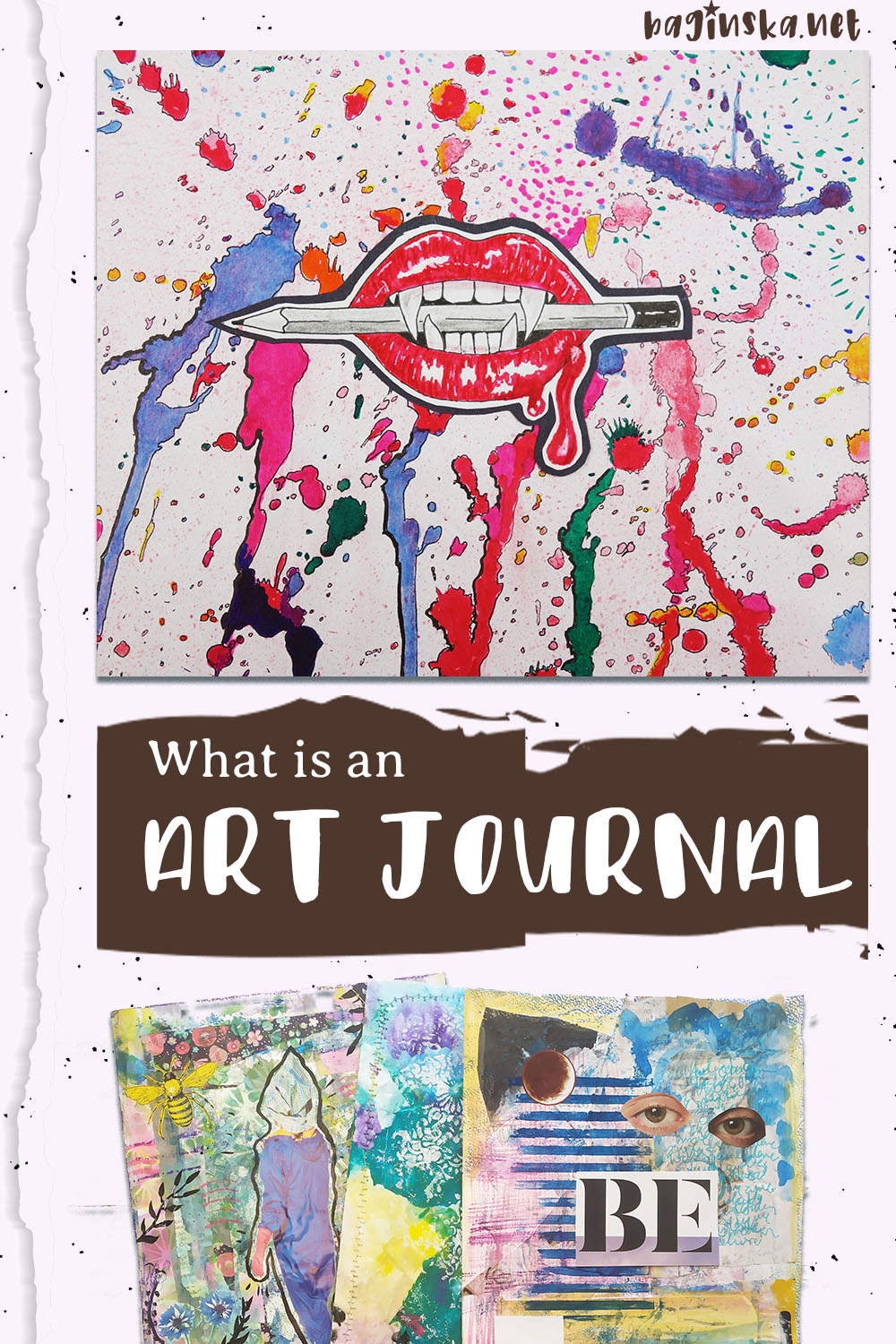
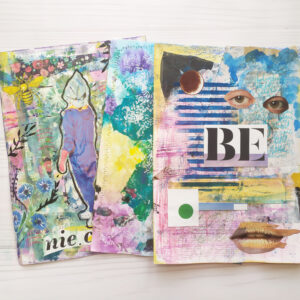
An art journal is essentially a sketchbook, notebook, or any kind of space where you can unleash your creative expression. Put more simply, it’s a notebook in which you paint, draw, doodle, splatter, glue—whatever your artistic soul craves. But wait, maybe you’re thinking you don’t have an “artistic soul”? That’s fine! An art journal is a tool for everyone, and everyone has a need to create—even if you don’t call it “art.” You don’t need to know how to draw, paint, sculpt, or compose at all.
Why Keep an Art Journal?
Although you’ll find plenty of beautiful art journal pages online, the most important part of art journaling is the process of creating. It’s about taking joy in the act of making something. It can be a form of relaxation, a return to the carefree scribbling of childhood, or even an outlet for tougher emotions.
An art journal is also a fantastic place to experiment. You’re not creating a massive canvas for exhibition or judgment. You’re simply filling the pages of a notebook, and mistakes are not only welcome—they’re practically essential. After all, we experiment to learn what works and what doesn’t. In short, mistakes teach us valuable lessons, and an art journal is perfect for that.
This leads us to another key benefit: art journaling greatly boosts creativity. And creativity isn’t just for professional artists—it’s a valuable, practical skill in every area of life.
What Do You Need for an Art Journal?
An art journal can be any simple notebook plus whatever pens, pencils, or supplies you already have at home. Really, you don’t have to spend a fortune to start. If you’re excited to dive into art journaling, though, you might be itching to experiment with different techniques and materials.
In that case, sturdier paper—something more resistant to moisture than standard notebook paper—can be helpful. But you don’t need high-quality, expensive paper. It’s not about having the perfect journal. In many stores (like Action), you can find inexpensive sketchbooks that are perfectly fine, and they won’t break the bank. You don’t even have to buy a notebook—you could use loose sheets of watercolor paper if you prefer.
But if you find yourself hesitating because you think you lack the “right” materials, please, please just start with regular paper. Supplies are secondary. Remember, it’s the process that really matters!
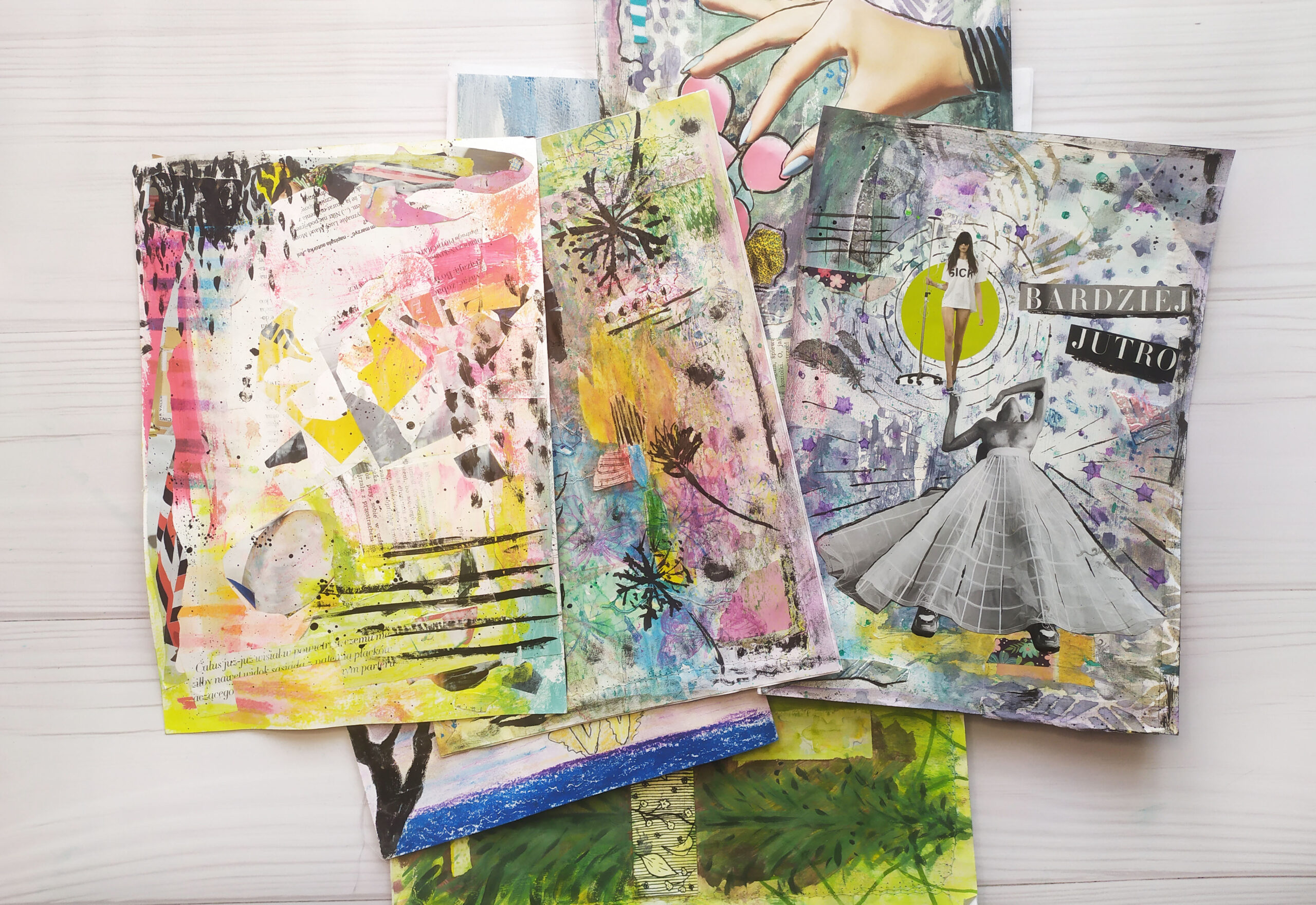
So, You’ve Got the Paper. Now What? It all depends on the techniques you want to use. Of course, you don’t have to stick to just one. This is supposed to be fun, so feel free to mix techniques. In fact, there’s a name for that—mixed media—but more on that later.
Collage Supplies
Glue and scissors will come in handy if you decide to use collage. You can work with interesting images from newspapers and magazines—headlines, words, or even a whole “wall” of text (which makes a great background). And you don’t have to limit yourself to just magazines. What else can you cut and stick? All sorts of scraps, bits of regular paper, pages from old planners, discarded notes, or scrapbooking paper.
Paints (a.k.a. “Wet Media”)
Paints fall into the so-called wet media category. But don’t worry—no one’s asking you to paint sunflowers or a starry night right off the bat! Paints can simply be used to create an interesting background or to make prints. And you don’t need fancy stamps to do that either; your fingers or a brush can make wonderfully unique marks.
In the beginning, the quality of your paints doesn’t really matter. Besides, you can find decent products in children’s art sections. Watercolors, poster paints, or even acrylics from budget stores like Action or Tedi are perfectly fine.
Markers, Brush Pens, Pens, and Pencils
You also don’t have to go all-out on quality with these. The idea is to keep it relaxed and let yourself explore. Of course, if you stick with art journaling, you can eventually invest in high-end pens and markers. As for what to do with them—use them for drawing, lettering, doodles, patterns, symbols—whatever strikes your fancy!
Great—You’ve Got Supplies and Motivation. Now What?
So, you have a nice stash of materials and plenty of enthusiasm…what’s next? How do you actually get started? That’s where the real fun begins!
How to start an Art Journal?
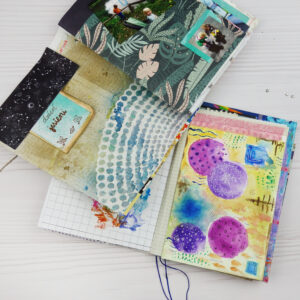
There’s no single “right” way to begin your art journal. You can approach it methodically, planning in advance what you want to create and which medium to use. Or you can go with pure spontaneity—lay out your supplies within reach, switch off your overthinking, and just let your hands do the work.
Easier said than done, right? How do you actually let your hands do the work? One of my favorite methods is to avoid starting on a blank white page. A white page can be intimidating—it seems to demand only perfect lines, which can feel paralyzing. Plus, this is an art journal, a safe space for imperfection. That’s why I like to begin on pages that already have some doodles or marks. You can also quickly scribble something—anything—just to break the ice. Then you can work on covering up those scribbles as you go. This is how the creative process can start flowing.
Of course, there are plenty of other ways to spark your creativity and break through a creative block.
See Also: [How to Overcome the Fear and Start Creating?]
So, what do you think—is art journaling something you’d like to dive into? How do you unleash your creativity, and what inspires you to keep going? Let me know in the comments!