For a long time, I struggled to find the best way to document my memories. I never doubted the value of preserving them, though. Like many of us, I’m a collector at heart. I love gathering and keeping things. Photos ended up in impersonal plastic albums, and various mementos piled up in ever-growing boxes. When the sheer volume of items started to overwhelm me, and my inner collector demanded better organization, I knew I had to find a solution.
Is Project Life the Answer?
At first, I discovered Project Life—a popular memory-keeping method. I quickly learned about it from worqshop.pl and domowa.tv. If you’re interested in Project Life, those blogs are a great resource.
Project Life simplifies documenting everyday life. You insert photos and beautifully designed journaling cards into an album. These cards not only enhance the album’s aesthetic but also provide space for written notes, adding a personal touch to the collection of photos. It’s a simple yet brilliant method, as proven by the many enthusiasts who use it.
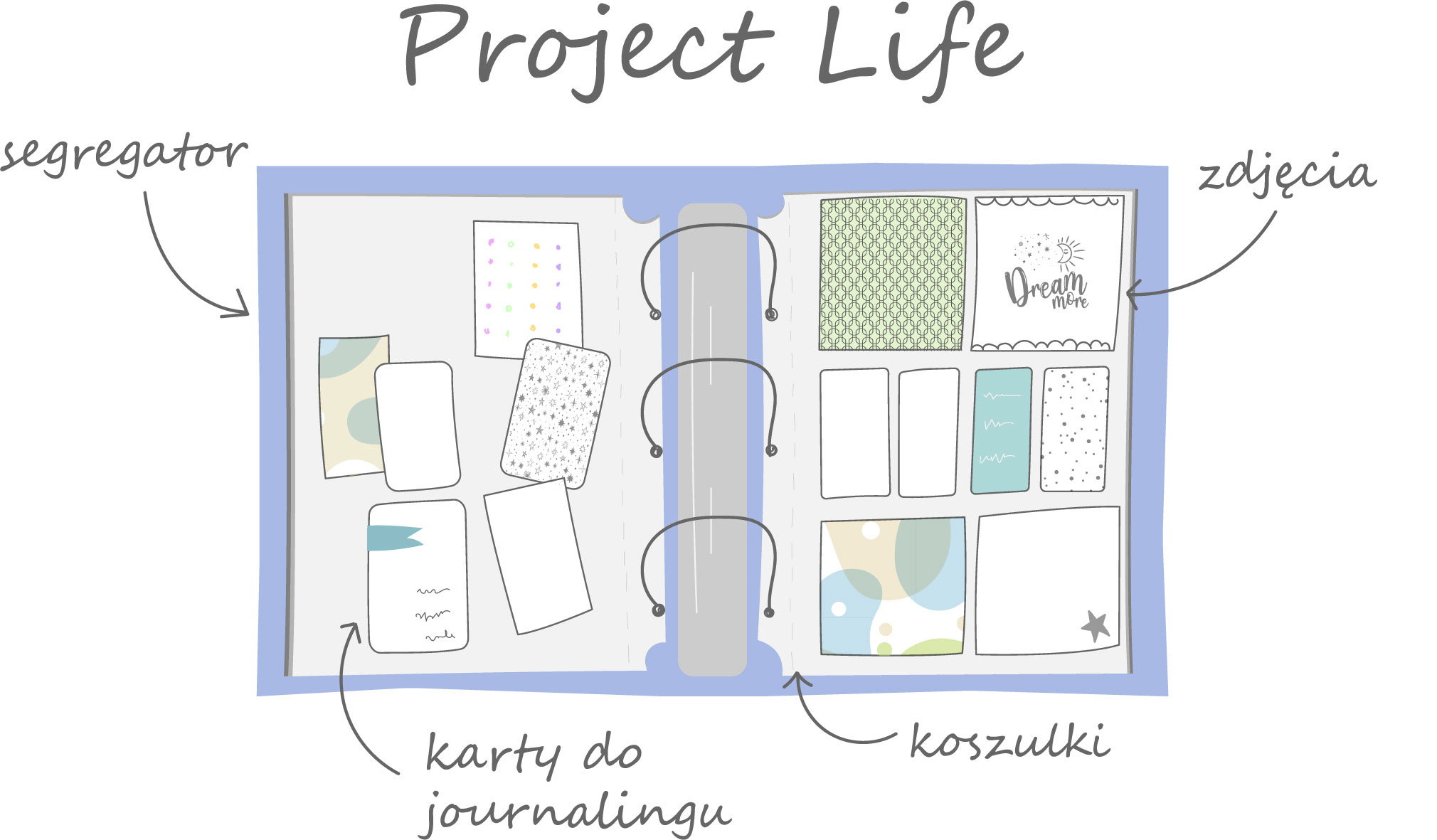
However, maintaining a Project Life album requires special pocket sleeves designed for specific-sized cards and photos. These sleeves fit into a custom binder with a different hole-punch system and dimensions than standard binders. While there’s nothing wrong with making an initial investment, I wanted to declutter my space rather than accumulate more supplies. Though Project Life is more flexible than traditional photo albums, I still found it too restrictive.
What About a Scrapbooking Album?
Before I delved into the topic, I associated scrapbooking with overly sweet birthday cards and elaborate “baby’s first year” albums. I know—that’s an unfair oversimplification. But at the time, that’s what I mostly came across, and it discouraged me from exploring further. No wonder—those were the types of scrapbooking projects typically sold at craft fairs.
I also associated scrapbooking with yet another collection of supplies I would need to acquire. After my decoupage phase, which left my shelves overflowing, I was hesitant to dive into another supply-heavy hobby. I had been enjoying the simplicity of crocheting with just a ball of yarn—though, let’s be honest, my basement shelves tell a different story. Once a collector, always a collector.
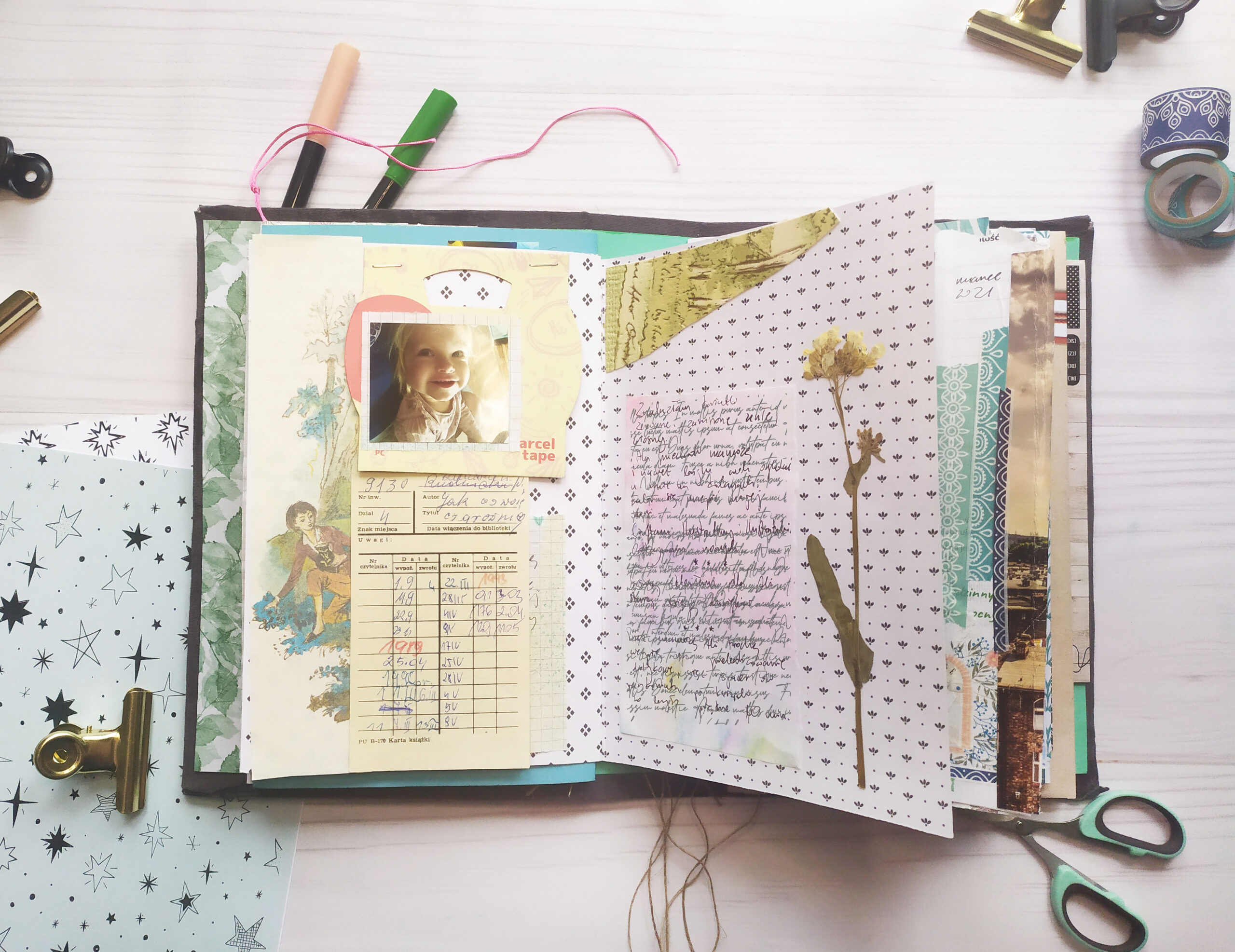
But back to the point. For some reason, I kept avoiding scrapbooking. That changed when I saw Paulina from domowa.tv showcase her approach to memory-keeping. Her albums combined elements of scrapbooking and Project Life. I love hybrid solutions—taking the best parts of different approaches to create something unique. Inspired by her and Kasia from worqshop, I decided to make a December Daily album in my own way. I glued photos and packaging snippets onto sturdy colored paper, writing my notes on white inserts or directly on the pages. That was the closest I had come to finding my perfect memory-keeping method.
It’s a Junk Journal!
In the end, I never bought a scrapbook album base. That’s because, one day, while scrolling through Pinterest, I stumbled upon something called a Junk Journal. It’s a handmade notebook you can use for anything—but one of the most popular uses is documenting memories. And that was it!
With a junk journal, I could use everything I already had at home. I could turn my overflowing box of keepsakes into an interactive, diverse book filled with pieces of my life’s story. Finally, I had a way to make use of all those maps, tickets, postcards, and—of course—photos. And once you start seeing everyday items as creative materials, your imagination explodes. That’s when I also started an art journal—but that’s another story.
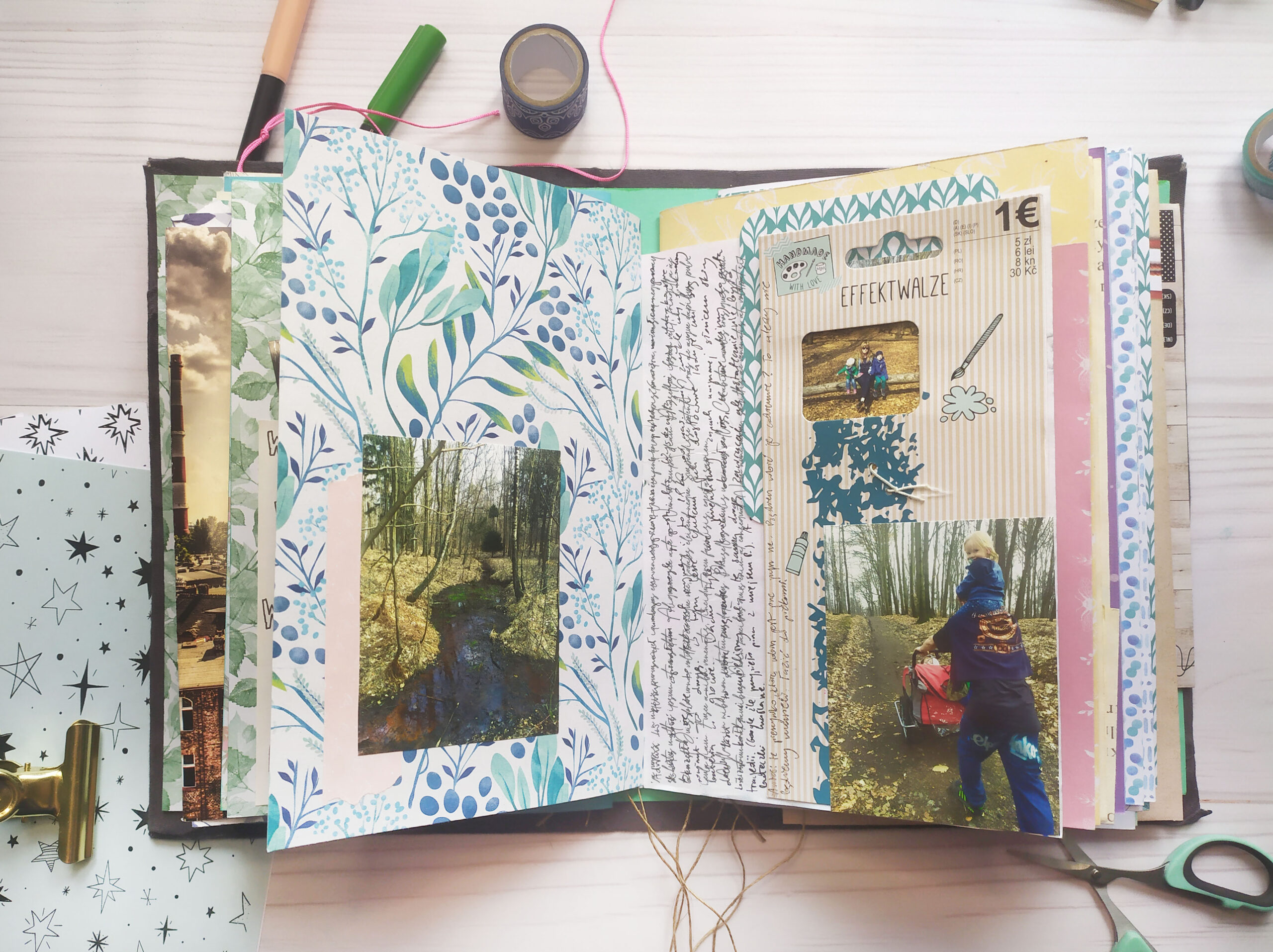
The best part? A junk journal can be made from anything. You don’t have to buy special scrapbooking papers or digital printables from Etsy—unless you want to. What you put in your junk journal is entirely up to you. Here are some ideas for documenting everyday moments:
- Movie, theater, concert, or museum tickets
- Event flyers and brochures
- Photos
- Greeting cards
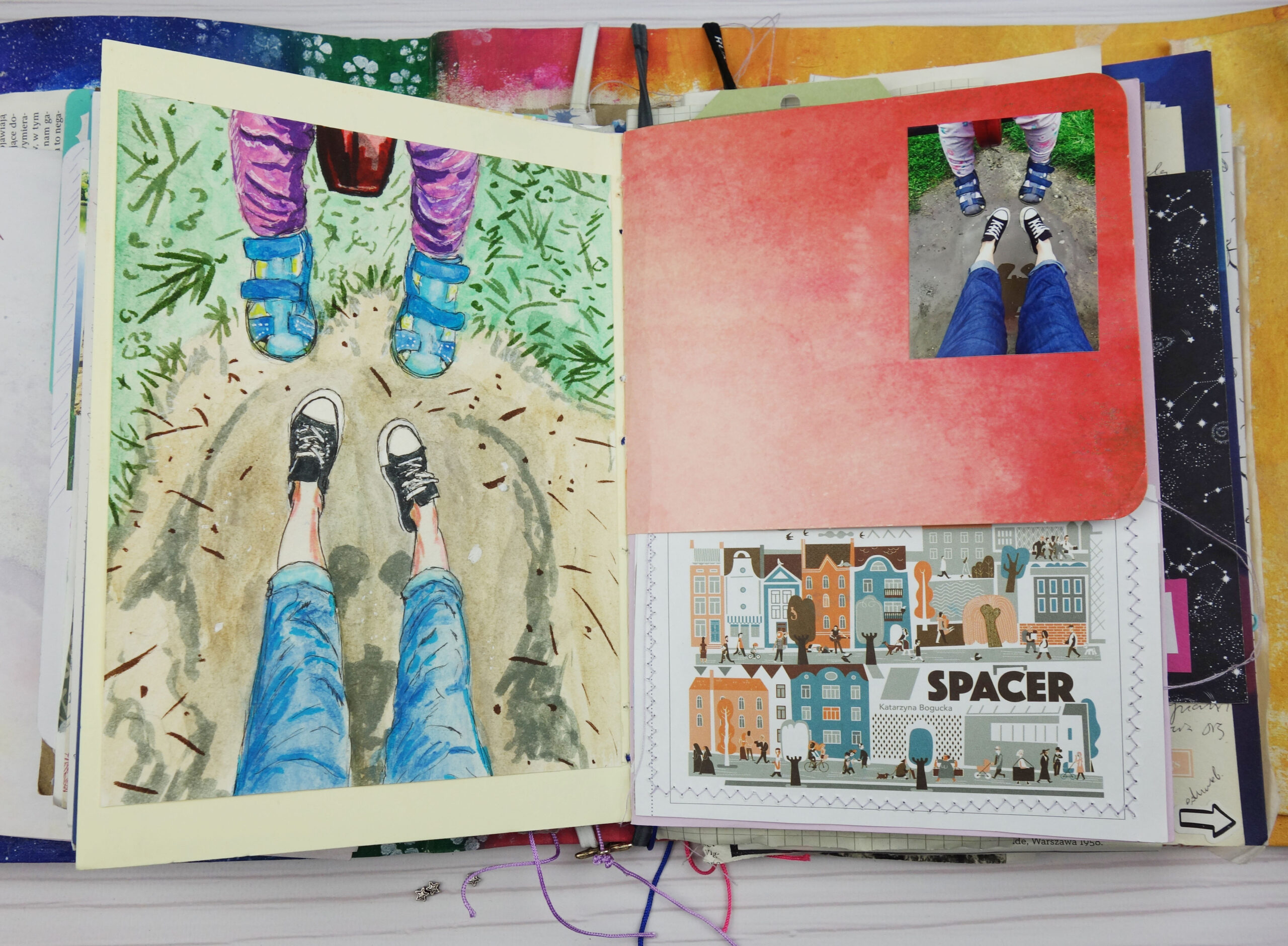
- Your drawings, sketches, and doodles
- Planner pages
- Children’s artwork and scribbles
- Pressed flowers and leaves
- Receipts and shopping lists
- Magazine clippings
But Isn’t a Junk Journal Just Scrapbooking?
Some might argue that a junk journal falls under the broad category of scrapbooking—and they wouldn’t be wrong. When researching different types of journals, I came across the idea that a smash book is what scrapbooking originally was: collecting and attaching everyday memorabilia into a notebook. There’s some truth to that. Scrapbooking is much older than I initially thought when I first encountered those cutesy baby albums. In fact, Mark Twain himself was a serious scrapbooker. Yes, the Mark Twain of Tom Sawyer! He even patented a special album with pages that stuck together when moistened—much like postage stamps.
For the purists out there, I want to emphasize that I see these terms as guidelines, not rigid definitions.
Why Is a Junk Journal My Perfect Memory-Keeping Method?
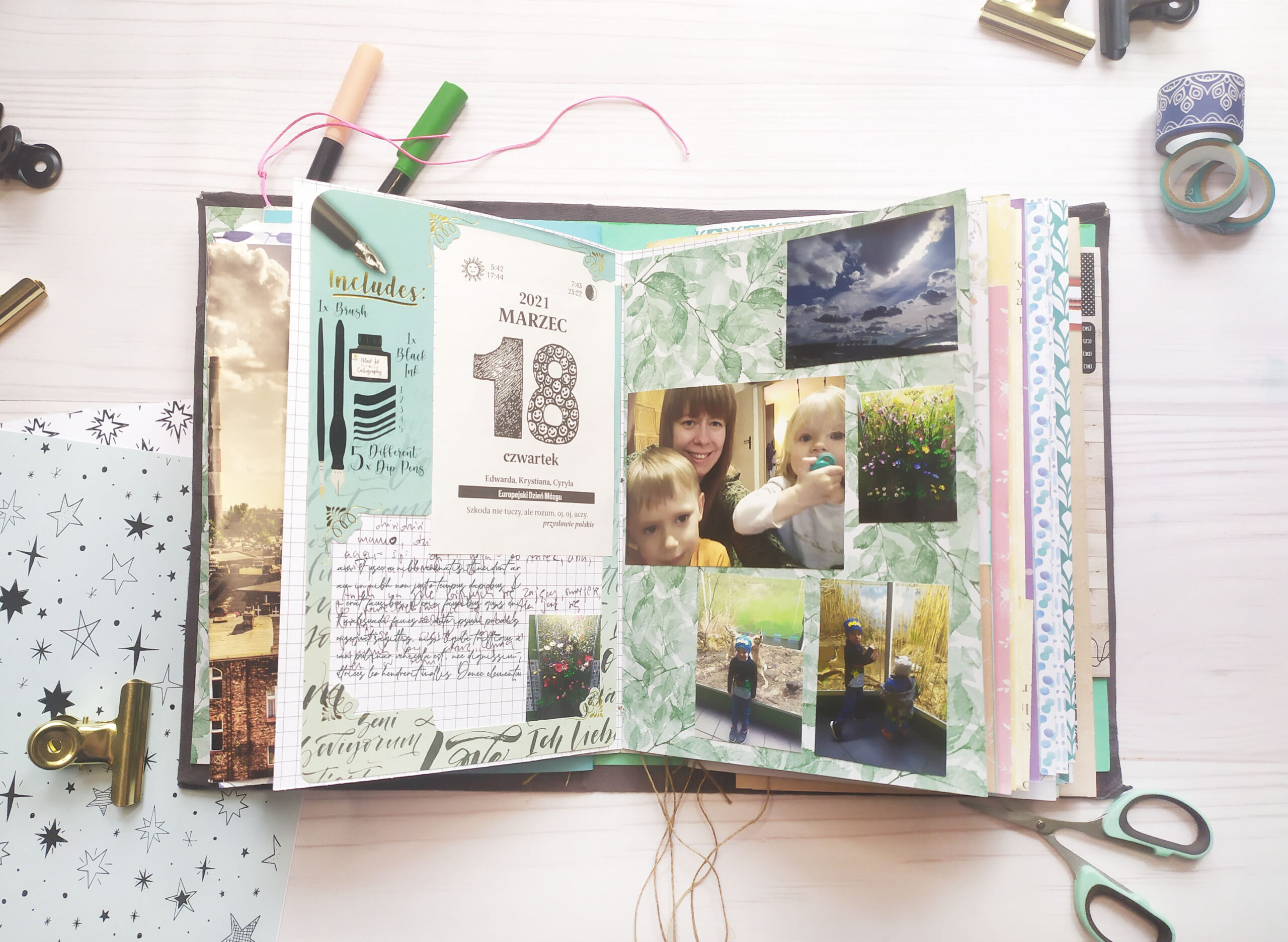
First, junk journaling is incredibly flexible. There are no pre-set pockets forcing me to fit items into specific sizes. The only limit is the page itself—but even that can be extended using clever techniques to add space. That means I can include any keepsake that fits between the covers.
Check out: Quick and Clever Ways to Increase the Capacity of Your Planner, Notebook, or Journal.
Each spread can have a completely different style—or no style at all. I can write one day, create a visual diary the next, or just glue in photos another time. My only rule is to document what I want to remember.
I maintain my junk journal at a pace that suits me. I try to update it at least once a month. In the meantime, I tuck things between its pages or jot down notes on my phone. Sometimes, I sit down and create something quickly and spontaneously. I’ve learned to let go of perfection—better to leave some record than to aim for a flawless documentation process and end up doing nothing at all. Years from now, on some dull March evening, when I flip through my journal, the precise dates and details won’t matter as much as the memories themselves.
Are you also searching for your ideal way to document memories? What do you think of junk journaling? Or do you have another method I haven’t explored yet? Let me know! If this topic interests you, be sure to check out more posts on junk journaling.
I hope this post was inspiring. I’d love to hear your thoughts. Thanks for reading, and see you around!