Have you been wanting to start creating but can’t seem to push past that initial barrier? Maybe you really want to draw, but you keep finding substitute creative activities instead. Or perhaps you’d love to do “something” creative but have no idea what that might be. You feel totally non-creative and wonder where other people get their ideas. If any of this sounds like you, I have good news: I’ve been there, too. And for most of these problems, there is a solution—though sometimes you have to do a bit of searching and head-scratching to find it. Luckily, you’ll find some of those solutions right here in this post. Let’s dive in!
Ah, Those “Ideas”
Where do other people get their ideas from? Sure, people can have plenty of ideas, but what good are they if you don’t act on them? The biggest challenge is turning ideas into reality. Sometimes you should even start doing something before any great idea actually comes to mind. Why? Because the best ideas often come while you’re in the middle of taking action, learning, and creating.
Yes, it’s easy to say, “You just have to start doing,” but how do you do that?
But I’m Just Not Creative
We could spend hours talking about how that isn’t true—that everyone has innate creative power and that creativity is something you can develop. But let’s take that voice in your head (“I’m not creative”) and approach it from another angle. Okay, so you’re not creative. Does that mean you can’t create at all? Who says you must be creative, artistic, or some kind of “professional” to make things? Is a special license required to pick up a pencil or a brush? Will the “art police” break into your home and confiscate your brush pens if you dare to draw a little?
It sounds ridiculous, right? Every bit as absurd as telling yourself you’re not creative—especially when you have a real urge to make something but don’t do it.
How to Start Creating
One of my main problems was that I took everything far too seriously. I just couldn’t relax. If I was drawing, it had to be perfectly from life. If I tried decoupage, I’d immediately think about selling items so I could at least cover the cost of supplies. It’s like I treated creativity not as a natural human need, but as some frivolous fancy. My biggest block was with drawing, in particular.
See also: [Beliefs About Drawing That Kept Me From It]
All that changed when I discovered a wonderful tool that helped me see creativity in a whole new light: the art journal. If you’re not familiar with the concept, it’s basically any notebook where you can doodle, paint, draw, paste—whatever your creative heart desires. An art journal is made for experimentation; it doesn’t have to be filled with the stunning, polished compositions you’ll find on Pinterest under “art journal.”
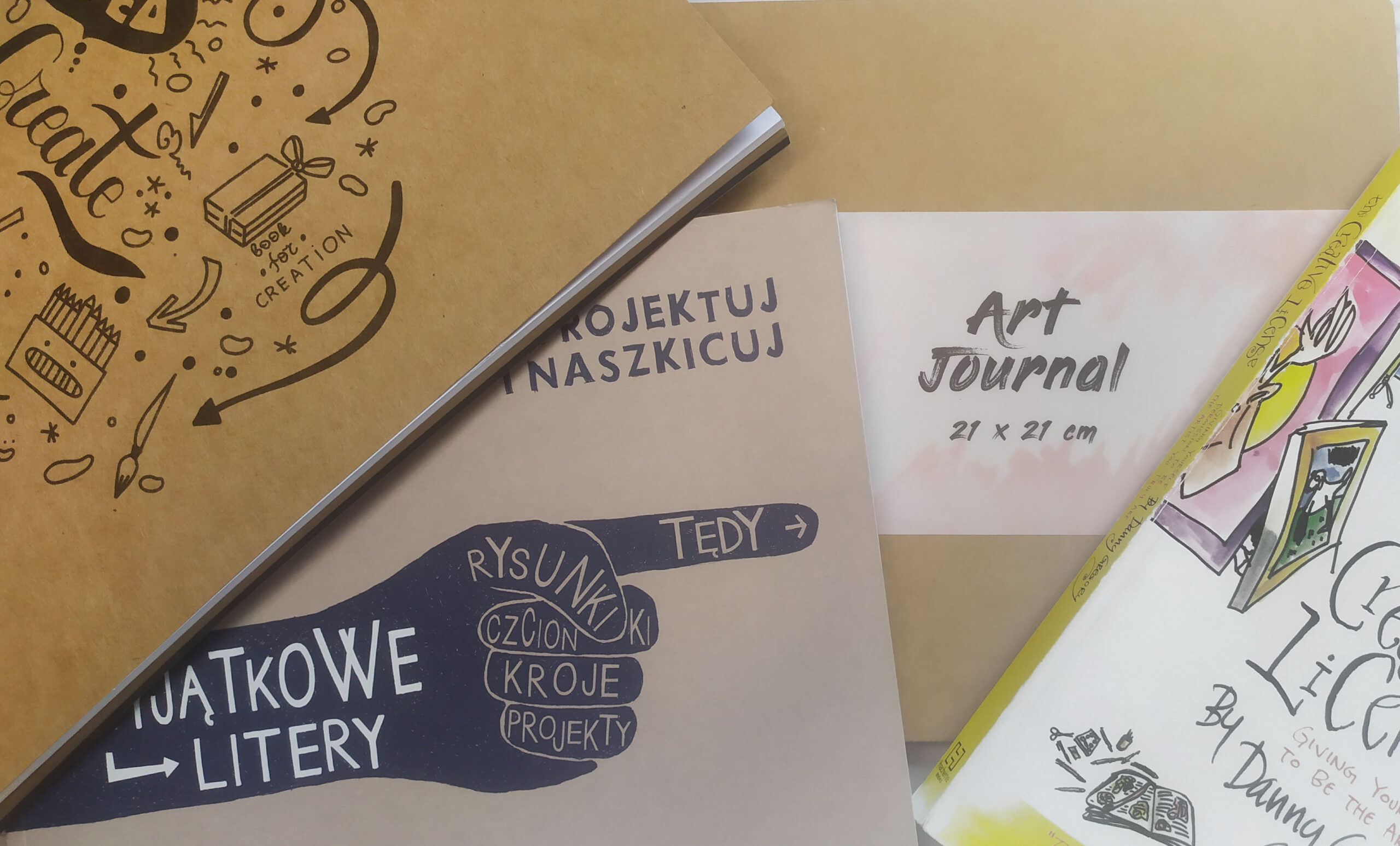
In fact, you don’t even need a notebook for this “art journaling” approach. Ordinary copy paper is enough. Which leads me to the first key step in loosening up your approach to creating: do not start out with some super-fancy sketchbook filled with top-of-the-paper. There’ll be time for that later. Instead, start with something simpler, something you won’t feel bad about “ruining,” something that won’t paralyze you with its sheer awesomeness. For example, I began with a few sheets of paper my kids had already doodled on (don’t worry, I kept their best drawings). Or pages where I tested different pens. This approach not only helps you relax mentally, but it also offers another advantage:
Don’t Start With a Blank Page
Starting with a blank page can be much harder. You look at that pristine white surface, vaguely imagining something amazing that should appear. Then you draw your first line—which turns out crooked. That solitary, awkward line on an otherwise flawless sheet. Immediately, your inner critic starts rubbing its hands together in glee, and you tense up even more before drawing the next line.
So how to begin? Grab a page that’s already been scribbled on. Maybe start in the margin or build upon those existing doodles. Or try covering part of the page. Paint around whatever’s on there. Actually, there are lots of ways to avoid beginning on a perfectly blank page.
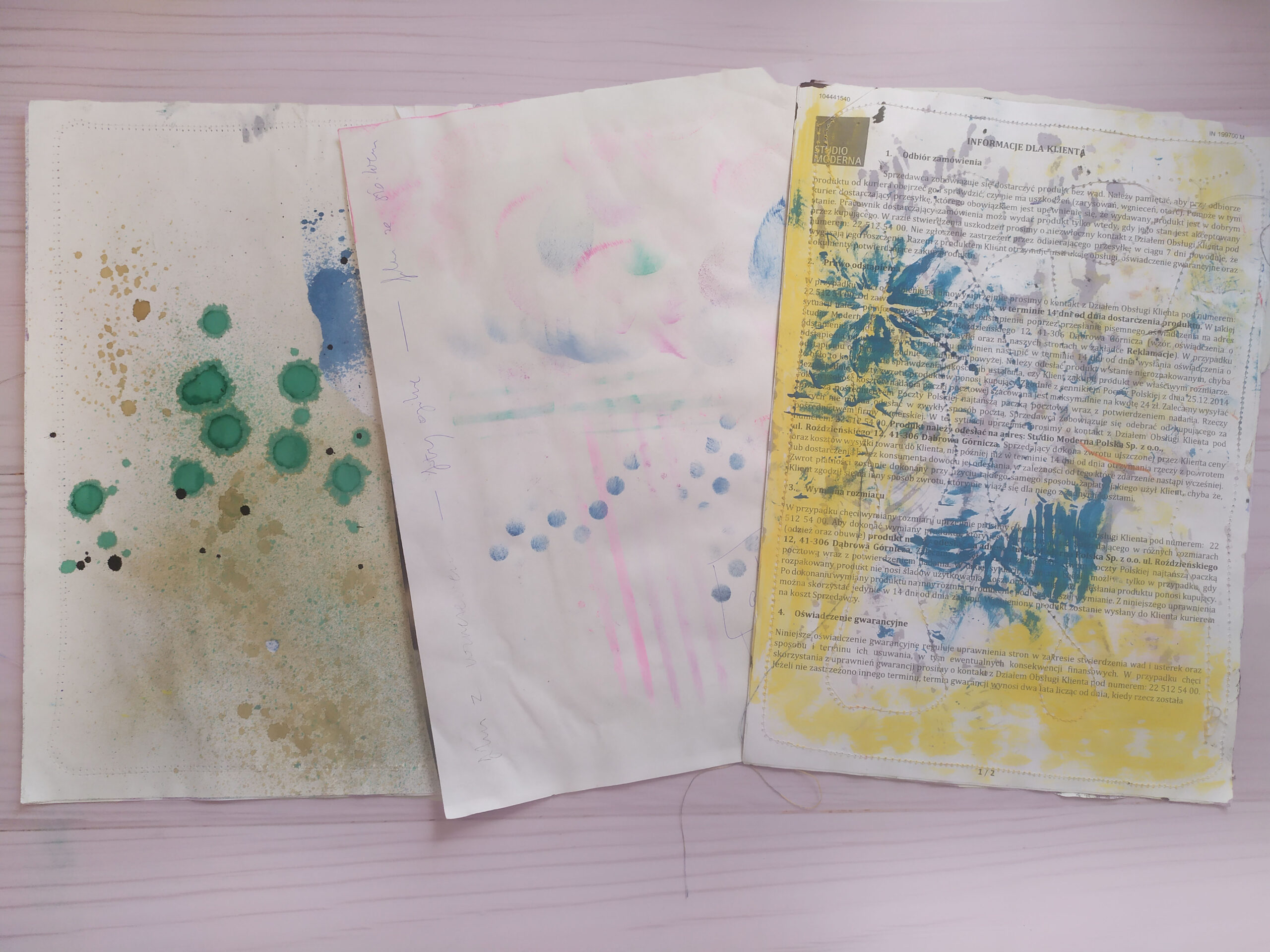
For instance, you could spend a few minutes writing down whatever pops into your head—no need to form coherent sentences. Think “stream of consciousness,” or maybe just vent about something that annoyed you today. You can even write one word on top of another. Afterward, try covering it up with paint, gesso, or something else. Don’t like writing at all? Deliberately spill something on the paper to create a stain.
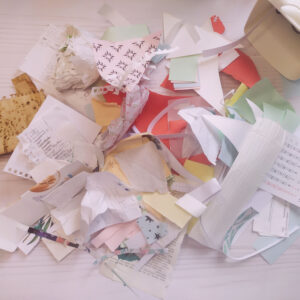
I keep a small container on my desk for paper scraps. More than once, I’ve started an art journal page by gluing those scraps onto a piece of paper. In a similar spirit, check out Jennibellie’s YouTube video, where she shows how she prepares the edges of her future art journal pages.
Notice that if you focus on not starting with a blank page, as soon as you try any of these techniques, you’re already taking action!
Expect Nothing—Except Fun
Maybe you’re in the mood to create something, but you don’t really have an idea. Try changing the question from “What do I want to make?” to “With what do I feel like creating today?” Is it watercolors, paper collage, or maybe crayons? Yes, crayons! They’re a blast to use, and there’s no rule saying adults can’t use them.
On the other hand, perhaps you do have an idea in mind and you’ve already visualized how it should look. Let me tell you right now, the final result will almost certainly not match the image in your head—often not even close. The only solution is to accept that fact from the start.
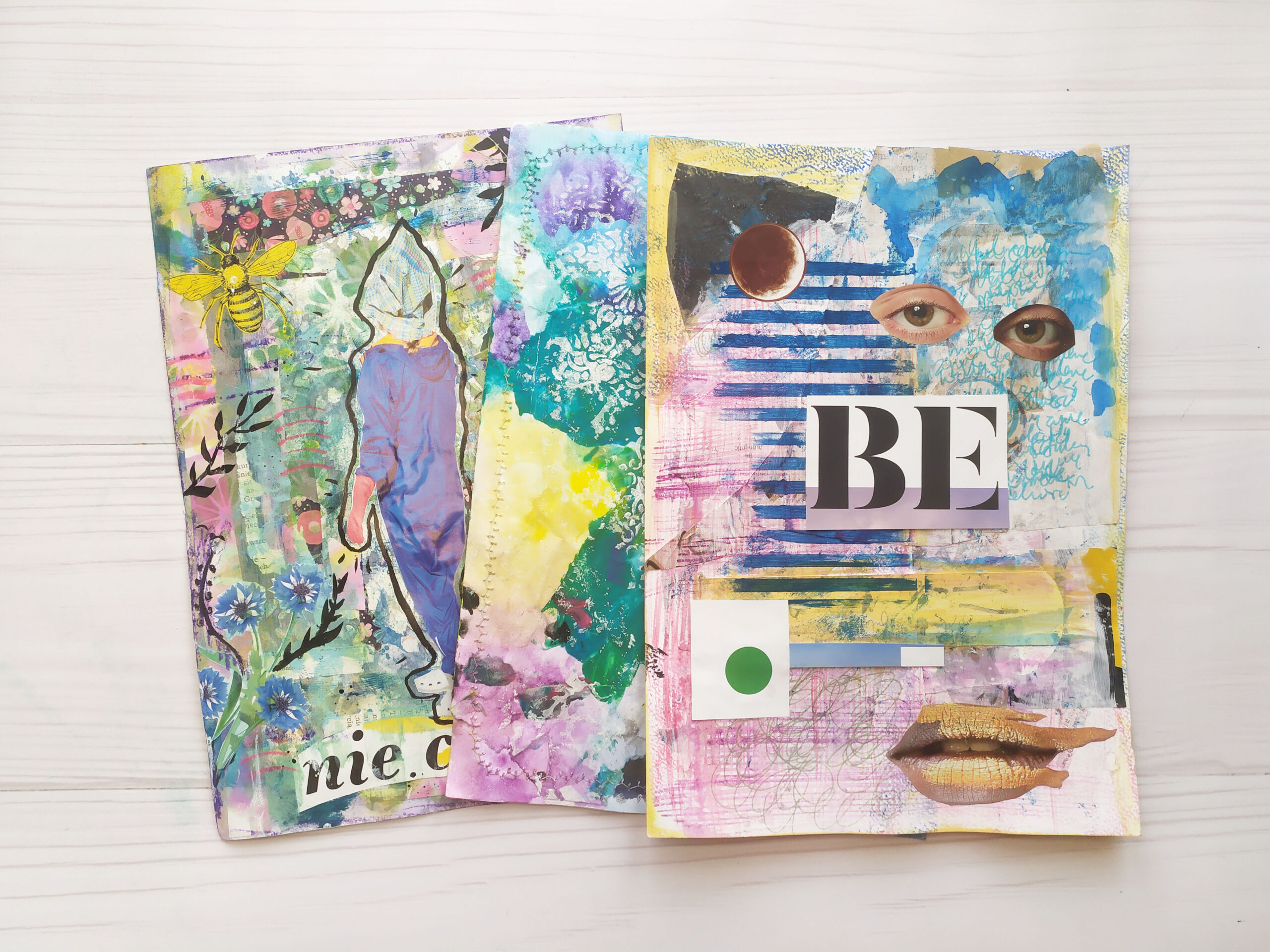
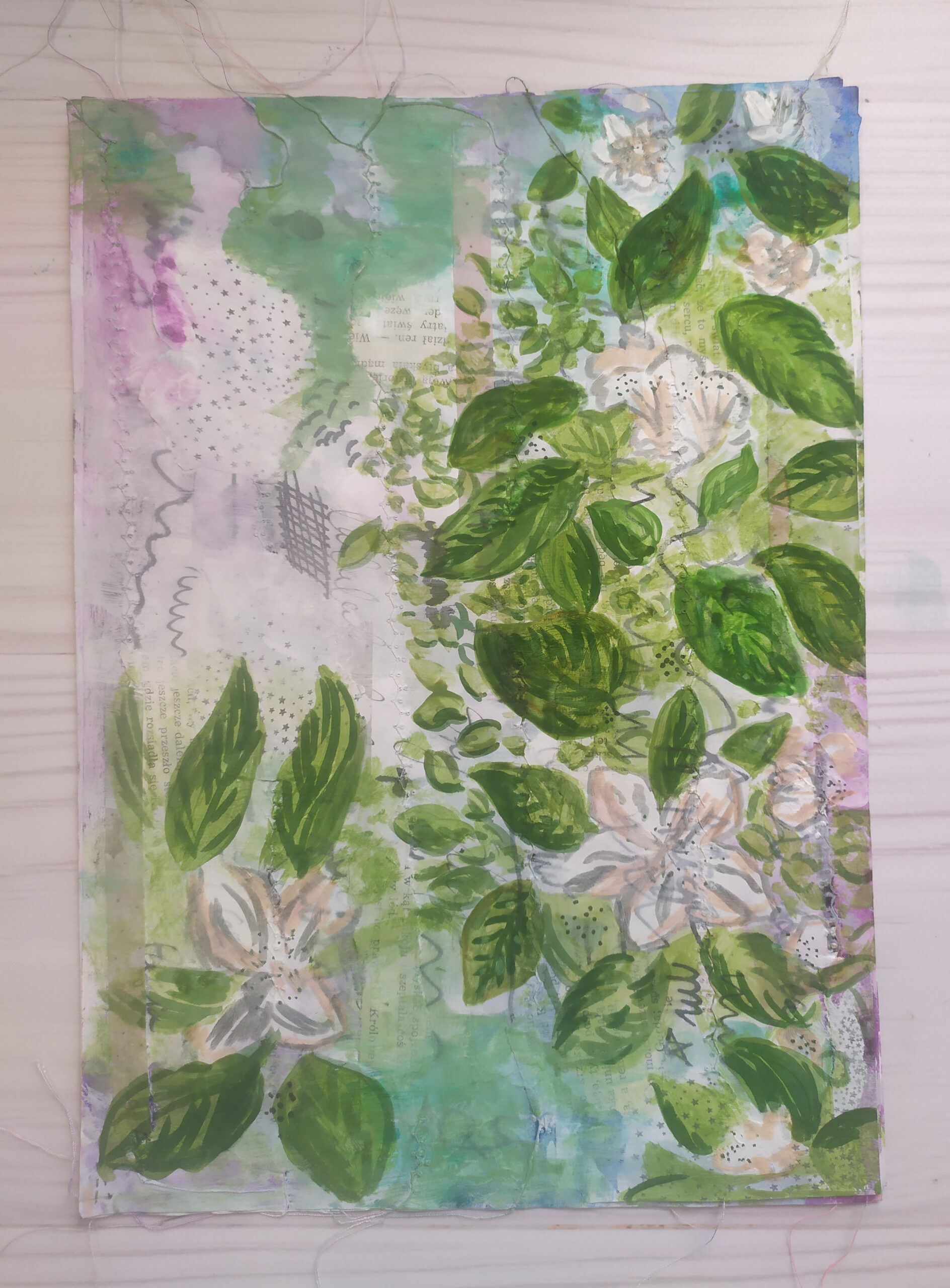
The whole point of art journaling is the process. If you end up with something brilliant, that’s a happy bonus. But don’t make that your main focus. Remember, even if you don’t create a masterpiece, it still matters that you created something. Below you can see one of my not-so-impressive final results. 😉
You might create something kinda cool but still notice mistakes—there are always mistakes. Maybe your hand will shake, you’ll get a paint blotch, or a crooked line. If you try your hand at lettering, you’ll probably have at least one weird-looking letter. Everybody, even the most famous artists, makes mistakes far more often than you’d think. They just fix them later, often digitally. There’s nothing wrong with that. Why start all over because of a single crooked line?
And speaking of “great artists,” do you really think every single sketch they do is a timeless masterpiece? Don’t approach your creative session like it’s a big assignment. You’re not making a grand work of art today—you’re playing, practicing, experimenting. Experiments often turn out so-so. Truthfully, it’s rare for an experiment to yield a truly awesome result right off the bat. Usually you fiddle around, think “Hmm, that’s interesting,” draw a few lessons from it, and then experiment again. That’s the creative process. Art journaling is practically made for this.
“Very Ugly” Creations
Often, we get paralyzed by imagining what other people would say about our art. But guess what—you don’t have to show today’s project to anyone. Really, no one needs to see it but you. I know there’s a paradox here: on the one hand, you fear criticism, but on the other, you want to share your work. There’s nothing wrong with that. It’s a natural desire.
You can make a deal with yourself that you won’t even consider sharing your work until it’s finished. You certainly don’t have to post it on all your social media. Maybe just send it to one trusted friend.
Also, remember that even if you created the most beautiful artwork in the world, some people (actually, many people) still wouldn’t like it. You can’t possibly please everyone. As they say, “There are many people out there, each with a different opinion.”
If you still feel you’re not fully convinced and are afraid to create anything, I have a special challenge for you: try to intentionally create an ugly page—make it the most hideous page possible. I’m curious what you’ll come up with.
Challenges, Tricks, and Checklists
Various challenges, prompts, and lists can really help you get started. There are tons of them online, and I’ll be posting some on my own blog as well. Whenever I publish one, I’ll update this post with links.
Unfortunately, it’s not enough to break through your creative block once and expect your mindset to be permanently changed. But each time you do push yourself, it’ll get easier. As you explore these methods, you might discover your own personal ways to overcome the hurdle of creating—or maybe you already have some! I’d love to hear about them, and I’d be really grateful if you’d share in the comments.