A junk journal can take the form of a notebook, book, or album—essentially, a handmade scrapbook. If you’ve landed here, you’ve probably seen some inspiring junk journals online and felt the urge to create your own. But where should you start? Don’t worry—there’s a method to it all! So, hop right into reading, because in this post, I’ll answer exactly that question.
See Also: [What Is a Junk Journal and Why Is It So Amazing?]
Why Do You Need a Junk Journal?
First, consider what you want to do with your junk journal. Think about how, back in school, you’d buy specific notebooks for different classes—graph paper for math, a sketchbook for art, and a music notebook for music lessons. As I’ve mentioned before, a junk journal can serve any purpose you like. Here are a few ideas.
I Want to Collect Memories in My Junk Journal!
Perfect—because a junk journal is great for storing memories. Ask yourself how you plan to document your daily life. Will it mostly be photos? Or maybe you’ll add all kinds of “junk” mementos (like tickets, labels, etc.)? You’ll definitely need space for notes.
For this type of junk journal, it’s helpful to have some pretty paper that can serve as a backdrop for glued-in photos. Scrapbooking paper might be the first option that comes to mind, but it’s not your only choice. You can always repurpose what you already have, like decorative wrapping paper or gift bags. Most of us have items lying around that are “too nice to throw away but not sure what to do with them.” In your search for base materials, try looking at the problem from a new angle—magazine pages, old calendars, or flyers can all work great. Extra space for keepsakes can come from envelopes, even reused ones.
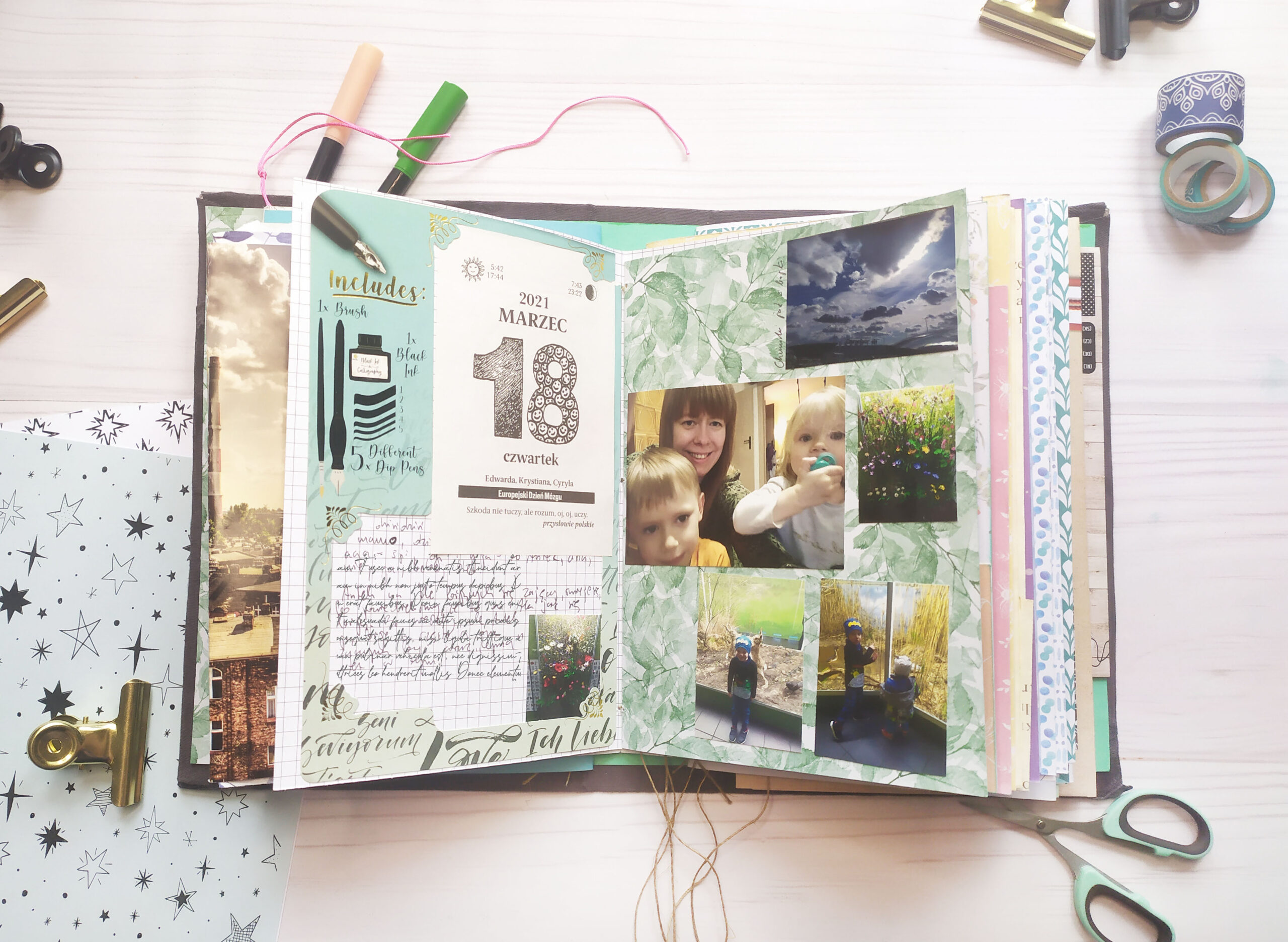
If the idea of collecting memories in a junk journal sounds interesting, check out my post on this topic: [My Favorite Way to Document Memories].
Ordinary Notebooks Are Boring—My Junk Journal Will Be All About Writing!
A junk journal is perfect if you’re looking to create an original notebook that lets you unleash your creative energy. After all, you’re not limited to graph paper—mixing lined, grid, dotted, or even colorful blank pages can produce a stunning effect. You probably have some unused paper lying around the house—think of those half-finished planners, calendars, or notebooks. You can also download free printable pages that I’ve prepared; they include standard dotted paper, slanted lines, dotted lines, and even star-patterned sheets (yes, you can still write on those!).
See Also: [Junk Journal for Notes – A Page-by-Page Review]
All those pages waiting to be filled don’t have to be just one color, either. Each page can be unique, eye-catching, and fun. The simplest way to achieve this? Dyeing your paper. I’ll be publishing a series of blog posts soon about different paper-dyeing techniques—stay tuned!
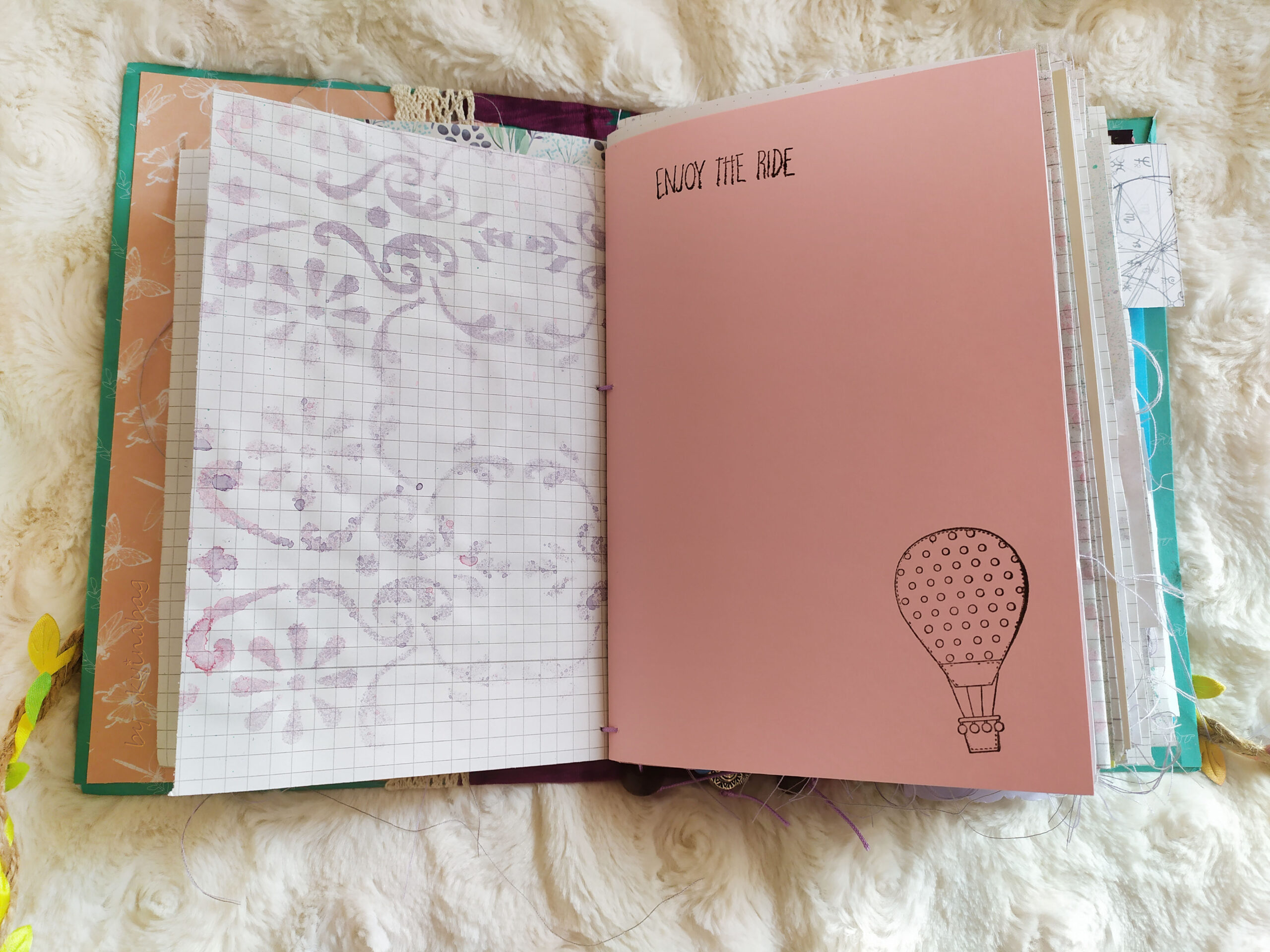
Once you’ve crafted your junk journal, you can use it like any other notebook—except with an added dose of joy and satisfaction. It could serve as a planner, a general note-taker, a gratitude journal, or even a diary. You might even transform it into a bullet journal if you like.
I Want to Discover or Boost My Creativity, But I Have No Idea How to Start an Art Journal!
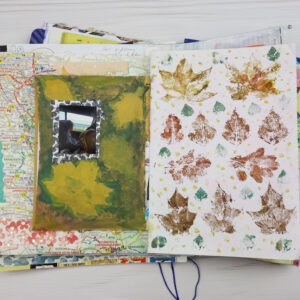
If you’ve heard of art journaling and want to give it a try but find pristine, blank sketchbooks intimidating, I have good news: a junk journal is perfect for that (as I might have mentioned before). Why? Simply because you won’t be stitching together perfect, empty white pages! So, take a look at what kinds of materials you can use to create a journal that fuels your creativity.
The hardest part is starting—and it’s always easier when there’s already something on your journal pages. So, go through your paper stash. Think about all those old notes you no longer need, doodle-filled pages from a boring meeting, a tattered book, or your kids’ unsuccessful drawings. How about old flyers, maps, or even store circulars? In art journaling, you can easily cover up existing elements or repurpose them in your composition with techniques like gesso, acrylic paint, or paper collage. The possibilities are endless, and this “junk journal” mindset will free you to see potential in what you once considered trash.
I Have No Idea What I’ll Do With My Junk Journal, But It Sounds So Awesome, I Just Want One!
I totally get it—I love junk journals too. You can want one without knowing what it’ll become, and that’s perfectly okay. Grab various papers, pages, and scraps, and just stitch them together. Do it for the sheer joy of creating or as an experiment. You don’t have to know exactly what you want or need right away—how else would you figure it out without experimenting? If you feel like giving it a try, go for it, especially since junk journaling doesn’t have to cost a fortune.
Ready to Keep Going?
What Do You Need to Make a Junk Journal?
At its core, a junk journal consists of:
- Signatures (groups of sheets folded together into mini-notebooks),
- A cover,
- And attaching those signatures to the cover (usually by sewing, but there are alternatives).
Here’s a short list of basic supplies you might need:
- Glue stick or universal craft glue (often called “magic” glue)
- Double-sided tape
- Scissors
- A larger needle
- Twine (e.g., jute twine)
Of course, if you decide not to sew, you’ll still want some kind of twine to bind the pages. The process begins by sorting all the papers you want to include into signatures (4 to 10 sheets each, once folded). For the cover, look for something more rigid, like a cookie box or an old folder. Of course, nothing stops you from just keeping your signatures loose if you prefer.
How to Get Started?
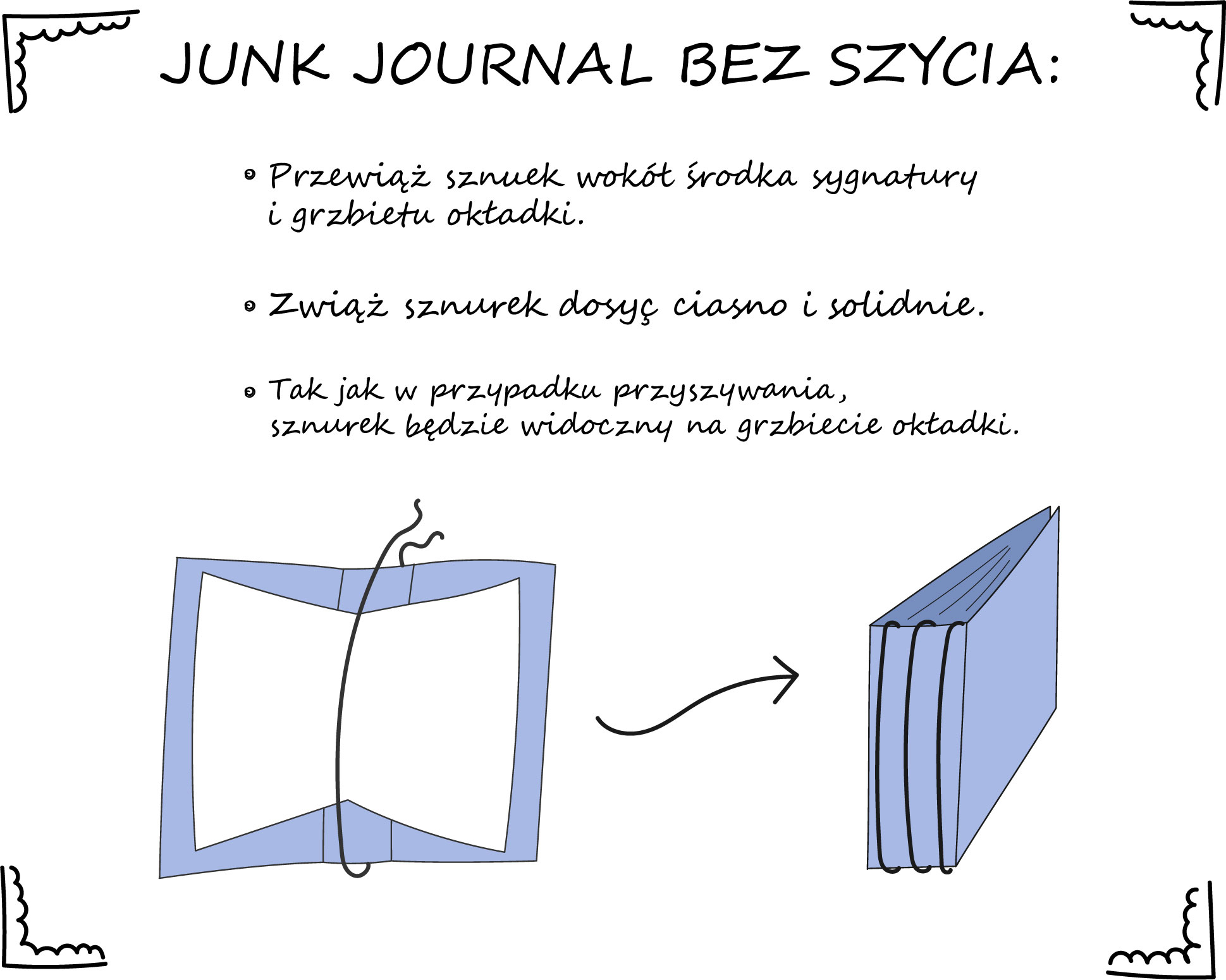
I’ve created a video and detailed instructions showing how I make an entire junk journal from start to finish. The cover in that demo is a bit more elaborate than necessary—especially for a beginner. All you really need to do is wrap a sturdy base in some cool paper (even simple kraft paper will do). You’ll also find instructions on how to sew in your signatures. But if you’d rather not sew at all, you can simply tie your signatures together, as shown in the illustration below.
The Final Shape Isn’t So… Final
Don’t wait too long to make your first junk journal, because it’s bound to evolve over time anyway. Regular use will inspire you to develop new methods or improvements. You might even want to start over with a completely different version. When that happens, you can reuse some of the pages from the original. That’s the beauty of junk journaling.
When you’re just starting out, don’t stress too much about aesthetics. Mixing styles, colors, and orientations actually suits a junk journal perfectly. Plus, through this process, you’ll expand your sense of what you like—or maybe even discover some fun new combinations.
Yes, all those gorgeous junk journals you see on Pinterest are brimming with hidden pockets, tabs, journaling cards, and fancy folded pages. But in the beginning, there’s no need to cram in every single idea. It’s often better to keep things simple at first. Most of those extras can be added later, anyway.
Discovering What Works for You
As you use your junk journal, you’ll figure out what works best for your style and needs. I’m so curious to hear how you plan to use a junk journal—do you have something specific in mind, or do you simply love the idea of having one? Let me know in the comments!
And if you’re already feeling that junk journal spark, check out my other posts on the topic here: [junk-journal].