There are countless adults who’ve always wanted to create—whether by drawing, singing, or any other form of artistic expression—but for various reasons, they never do. I’m one of them. I’ve always wanted to draw, yet I constantly ran into some kind of mental block. Finally, in my thirties I decided to tackle the issue once and for all. The truth is, I didn’t really know what was stopping me. I couldn’t understand why, if I wanted to draw so much, I wasn’t just doing it. So I began asking myself questions: why, for what purpose, how do I feel, what’s really going on?
If you have a similar problem—and I know many of us do—I invite you to read on. I’m exposing a few mechanisms here that can keep our hands tied when it comes to drawing (or creative hobbies in general). Keep in mind these are my personal discoveries. Perhaps the specific issues that hold you back are slightly different—or maybe some are the same. Either way, the process tends to be quite similar. Let’s dive in.
It’s Not Serious
Anyone who pursues some form of creative hobby has probably heard the comment: “You actually have time for that?” At least once. I even heard this from someone who had just received a hand-painted birthday card from me! Interestingly, these same people often have no problem spending hours in front of the TV. So what if they do? Still, it made me feel like if I’m going to draw, it has to be “serious,” and if it’s serious, then it has to turn out perfectly.
But there’s no “best” or “worst” way to spend your free time. Everyone should do whatever brings them joy or helps them relax. We all have a need to create—it’s fantastic when we don’t suppress that. If you’re still not convinced, remember that absolutely everyone needs to “waste” a bit of time now and then. Why not spend that time drawing?
Don’t Copy
When I was younger and showed people my drawings, the question I most often heard was, “Did you come up with that yourself?” Bam—that instantly made me feel inferior. I’ve always enjoyed copying things just to practice. I never felt confident in my drawing skills, but I thought that if I was “just copying,” it meant I was no good at art.
Finding out that, in his early days, even Leonardo da Vinci practiced by copying helped me, but only a little. The real breakthrough came when I stumbled upon a wonderfully apt analogy: If you want to learn guitar, you have to play someone else’s song first. When somebody proudly performs the classic song for instance, nobody asks, “Did you compose that yourself?” No, because we consider it perfectly natural to learn by playing existing songs.
So why do people say, “Don’t copy” when it comes to visual arts? Along with that advice often comes another warning: “Don’t look at other people’s work too much, or you’ll get accidentally inspired.” The reality is that many artists draw inspiration from the world around them, from other creative fields, or from timeless classics—and these are fantastic sources of ideas. But let’s be honest: professional artists also keep an eye on their “competition,” watching how others create.
The best thing you can do for your creative or drawing development is to enrich your “visual library,” meaning you should look at a lot of art. After all, how else will you discover different drawing styles, or learn how to pair colors? You might find that, at the start of your journey, your creations are heavily influenced by another artist’s style. From what I’ve gathered, that’s exactly how most people develop their own unique style. Keep an eye out for my upcoming blog post on how to study other people’s art to learn the most from it.
Don’t Draw From Photos
Yes, if you want to learn how to draw seriously, some say you shouldn’t rely on photos. But didn’t I mention earlier that taking drawing too seriously can do more harm than good? I ended up not drawing at all, simply because I felt awful about relying on photographs. If that’s what’s holding you back, here’s my take: it’s better to draw from a photo than not to draw at all.
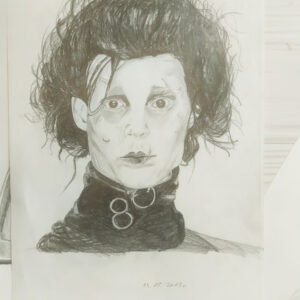
Digging deeper, I found that many professional artists also use photographs. A painting for someone’s thesis at the Academy of Fine Arts that was done from a photo? Absolutely. An illustrator hunting for “references” on Pinterest? You bet. It turns out there’s nothing wrong with that. In today’s world, nobody goes to the library and spends hours searching for pictures of the Philippine tarsier. We just hop on Google. Learning how different things look by studying photos is also a fantastic way to expand your visual library. Then, of course, it’s worth transferring that observational skill into the real world—just use both options, including photos.
You Have to Be Talented
The common notion of “talent,” often reinforced by schools, can be so damaging. It implies that if you have talent, everything comes easy and looks great without any effort. But that’s simply not true. Even talented people have to put in a ton of work to improve in the field where they supposedly “have talent.” Without real effort, talent doesn’t amount to much. Besides, it’s rare for someone to have such extraordinary, all-encompassing talent that they never need practice or study. If something feels challenging and your progress is slow, it just means you’re learning and developing. You’ve probably heard it before, but it’s worth repeating: there’s no point comparing yourself to others—only to your past self.
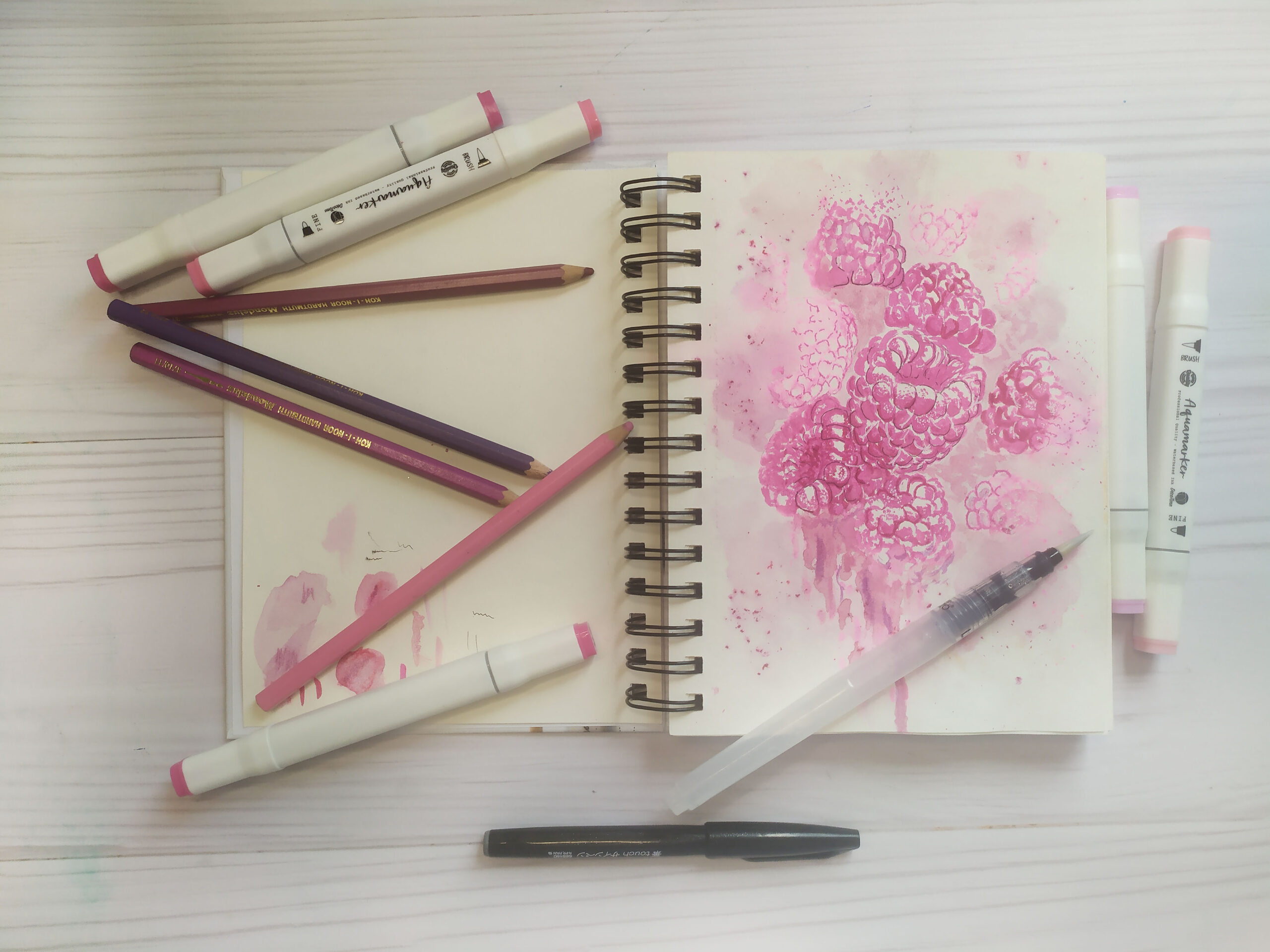
On the flip side of the “talent” coin, I used to think that since I wasn’t exceptionally gifted, there was no point in even trying to draw. As if there were some universal law dictating who can and who cannot draw. So whenever something didn’t turn out well, I’d get discouraged and assume I was no good. The fact is, even great artists or seasoned professionals make mistakes—it’s just on a different level. The act of creating is often a struggle, no matter how “big” or famous the creator might be.
Take It Easy
When I managed to relax, drawing became an incredibly soothing activity that brought me a real sense of satisfaction. Yet at the same time, I found myself getting terribly worked up about it. I’d overthink and concentrate on every single line. My lines were far from free and fluid; they were endlessly erased and reworked. I simply couldn’t allow myself to have fun while drawing. What helped me change that approach? Art journaling.
Another belief I held was that, as an adult, I should already know how to draw. Seriously, an adult who doodles like a child? But that’s exactly the point—approach it with the same laid-back curiosity and joy that a child does. Children learn by scribbling and experimenting, drawing on one page, then moving on to the next. They don’t cling to any single drawing just because it turned out a bit better. This is how they build their skills. If you haven’t been drawing, then naturally, once you start, your drawings may look a bit childlike. So what?
Voices in My Head
Whenever I sat down to draw, all those beliefs reappeared, voiced in my mind by imaginary onlookers—people who might, in theory, see my work. Sure, you don’t have to show your drawings to anyone, but at the same time, there’s a desire to share your passion.
In the beginning, I failed to notice that every one of these critical remarks belonged to my own inner critic.
All these ideas and assumptions fed into one overarching conviction: I’m just no good. And you know what? Even if you think you’re “no good,” you can still draw. If you have the urge or the need to create, it’s far better to draw badly than to feel frustrated and not draw at all. In the end, even if it takes a year, you’ll be better than you are today.