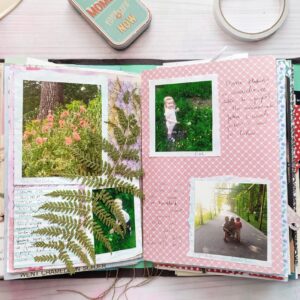
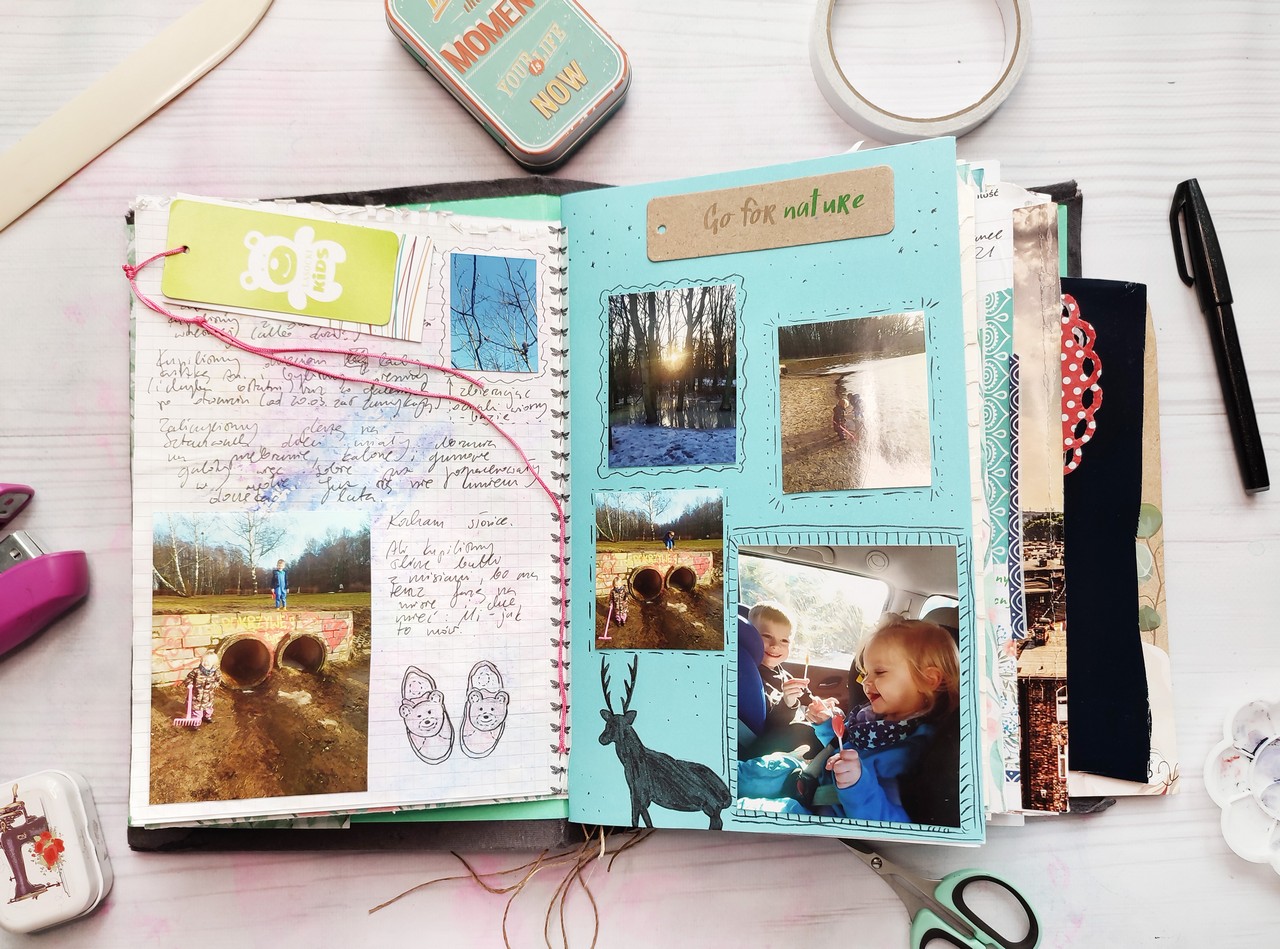
There are many ways to document memories. Traditional diary-writing or creating a photo-only album both serve as simple ways of keeping memories. This practice isn’t a new trend, but as more photos stay hidden on our phones, finding a unique, personal way to document daily life can make a big difference. So, what options are available today?
Sketchbook – a visual journal.
Project Life – a dedicated album for photos and cards (for journaling notes).
Scrapbooking Album – another popular memory-keeping format.
These are just a few examples. Personally, I chose the junk journal, as it allows the most freedom and creativity. This type of memory keeping can even be done in a simple notebook or planner. But first, let’s consider a few questions.
Find more on different types of journals in my post, All You Wanted to Know: Differences Between Art Journals and Junk Journals and More.
Is Memory Keeping Worth It?
Some say [documenting memories] leads to greater life satisfaction. Searching for moments to add to your journal helps you appreciate daily joys. By recording them, you capture memories that might fade over time. Next year, you may not remember a satisfying walk or special treat. Memory keeping is like creating a “joy jar” – reinforcing the moments worth cherishing. Our brains tend to retain negative memories more vividly, which is why we often recall small missteps.
Ordinary, everyday things and events might seem unworthy of documenting. But give it a try and return to these memories after a year, and you’ll see that your reality has changed quite a bit. The world rushes on, and even our plain, gray daily life carries its unique timestamp. Our small habits change, as do the songs we listen to, the books we read, and the clothes we wear. The places we visit daily shift over time. And we ourselves change, too. It’s an incredible feeling to observe this in your documented memories.
Challenges in Memory Keeping
*Believing it must be organized, chronological, and consistent.
*Feeling like it’s pointless if it’s not updated regularly.
*Thinking it has to look perfect.
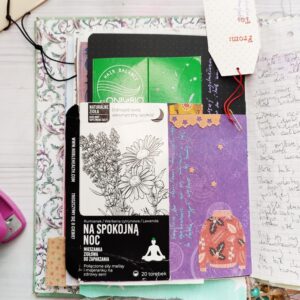
These three situations can make you stop keeping your album or journal, which means losing the opportunity to document your memories. Instead, it’s often better to occasionally paste a photo, jot down a note, or add a pretty piece of packaging from your favorite tea, rather than pressuring yourself to create a perfect life chronicle.
Sometimes, using just one aspect of memory-keeping is enough. That’s why I enjoy using a junk journal. Depending on my energy or mood, I might write something, paste a keepsake, or just let it be simple. Not every memory needs detailed notes or photos.
You don’t have to capture everything either. Sometimes, things slip away or get forgotten, and that’s okay. The main thing is to document moments that might make you smile months or years from now. It’s up to you to choose what you want to keep.
Your journal doesn’t need to be beautiful. Over time, you’ll get better at it, and your layouts will naturally improve. In the beginning, it’s more important to focus on the experiences you want to preserve. This makes it more likely you’ll keep coming back to it regularly.
Elements of a Memory Journal
Although revisiting old journals is amazing, I think I enjoy the process of documenting memories even more. Sitting down with glue, scissors, and my journal is just pure fun. So, let’s get into the specifics.
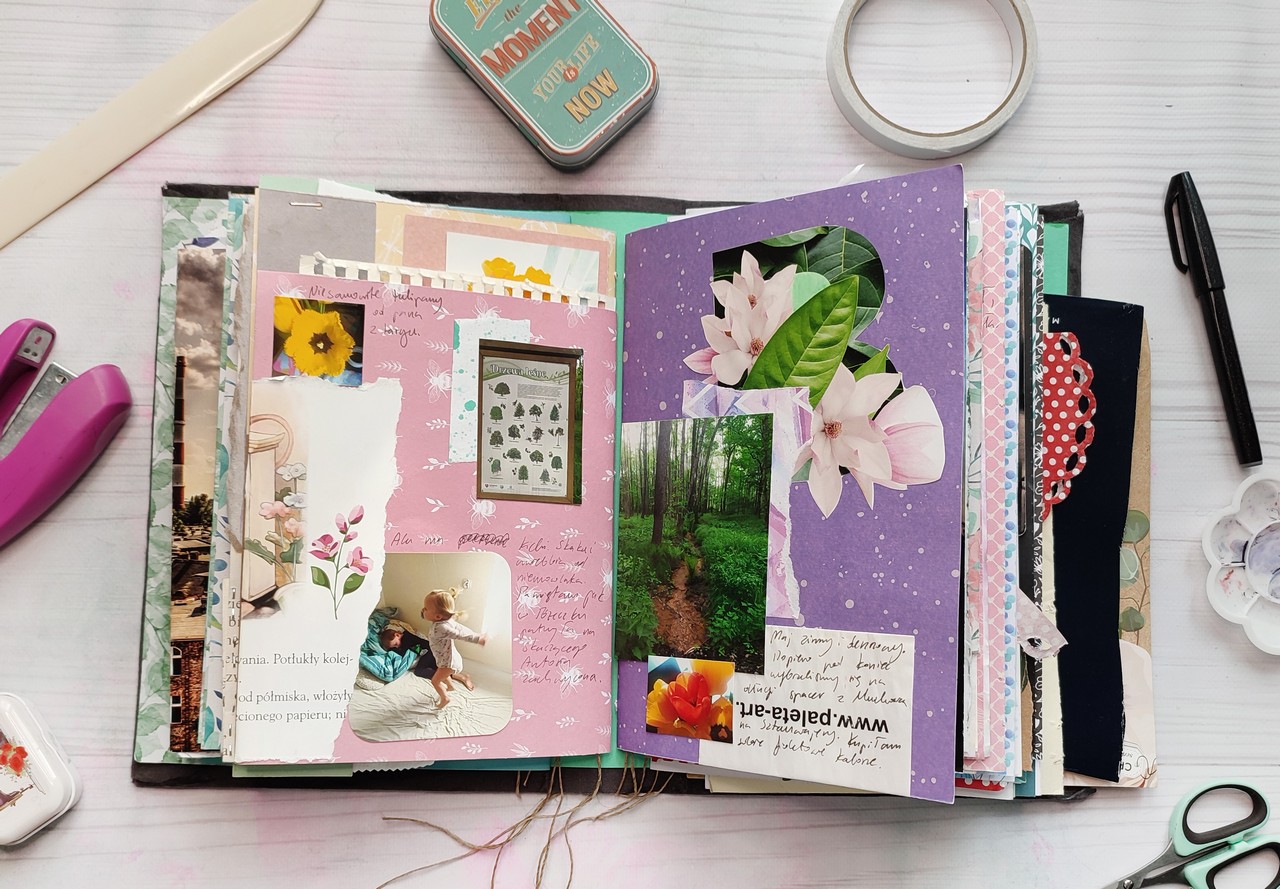
If I had to give a “recipe” for memory documentation, I’d focus on three main elements for any journal spread: photos, notes, and memorabilia. The rest are just decorative additions.
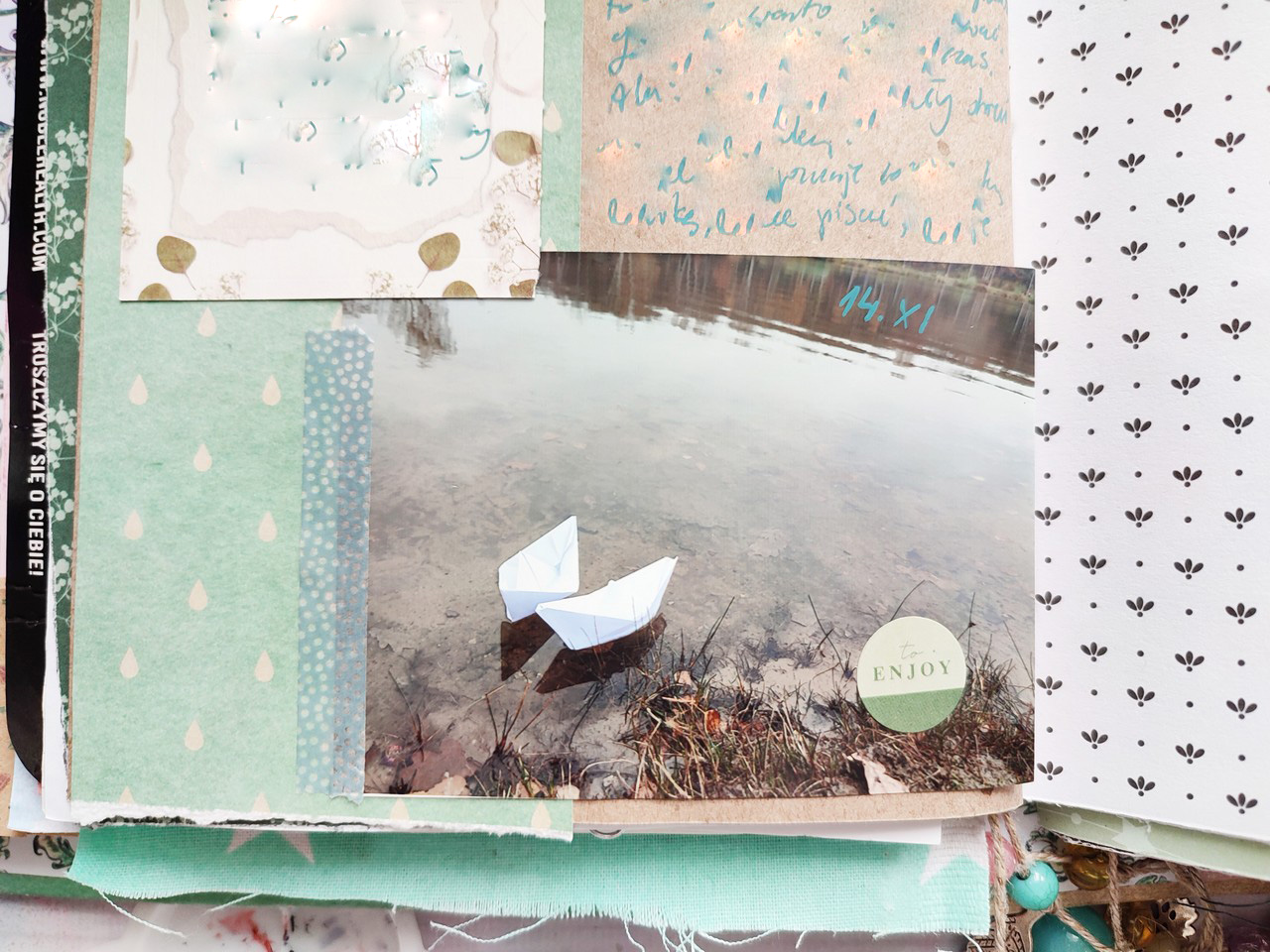
Photos.
These photos don’t need to be perfectly styled or capture something extraordinary. They can be ordinary shots from your phone’s gallery, blurry, or capturing something simple. You can even include a screenshot or a photo of a book you liked from an online store. And printing can be as easy as going to your local drugstore.
Soon, I’ll show you a quick and easy way to make a photo collage, so you don’t always need a standard 4×6 photo.
Notes.
An obvious part of memory documentation, notes can go directly under a photo, on the page itself, or on journaling cards. A simple piece of paper can work as a journaling card, or you can buy specialty ones like Project Life cards. You can even make your own with minimal effort; the back of a piece of scrapbook paper works perfectly. Printables are another option—there are tons online, both free and paid. Tags, labels, or fragments of memorabilia are also great for jotting things down.
Memorabilia.
Memorabilia can be anything you want to keep and that will fit in your journal or album. Common items include:
- Packaging fragments
- Flyers, catalogs, posters, folders
- Admission tickets
- Receipts
- Greeting cards
- Pressed plants, flowers, leaves
- Drawings, sketches, doodles
- Lists (like shopping lists)
- Small items like buttons, jewelry bits, coins, etc.
Decorations.
These can be anything from stickers, cutouts, papers, and doodles, to washi tape. Not a necessity, but certainly a lovely touch.
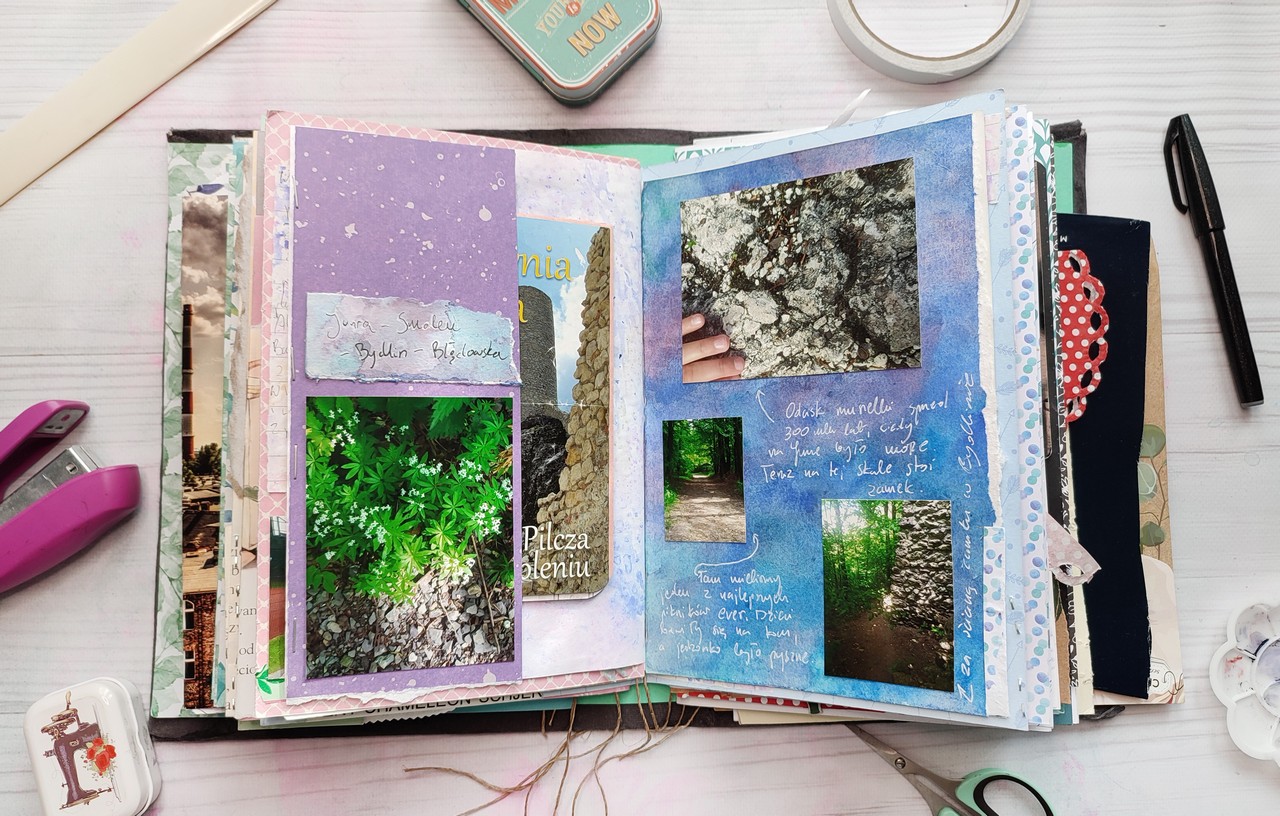
Not sure what to document?
Resist the urge to describe the entire day or to capture everything that feels important. If something doesn’t make it into your album, it doesn’t mean you’ve missed out. You can record just one thing from a few days or even mix different events. In the long run, these details won’t matter; it’s about having fun and enjoying the process. I avoid making memory documentation feel like another task or source of guilt. Order and strict chronology don’t matter here!
So, what should you document, describe, or photograph? I’ll share journaling ideas here on the blog and on Instagram, but I won’t leave you hanging right now.
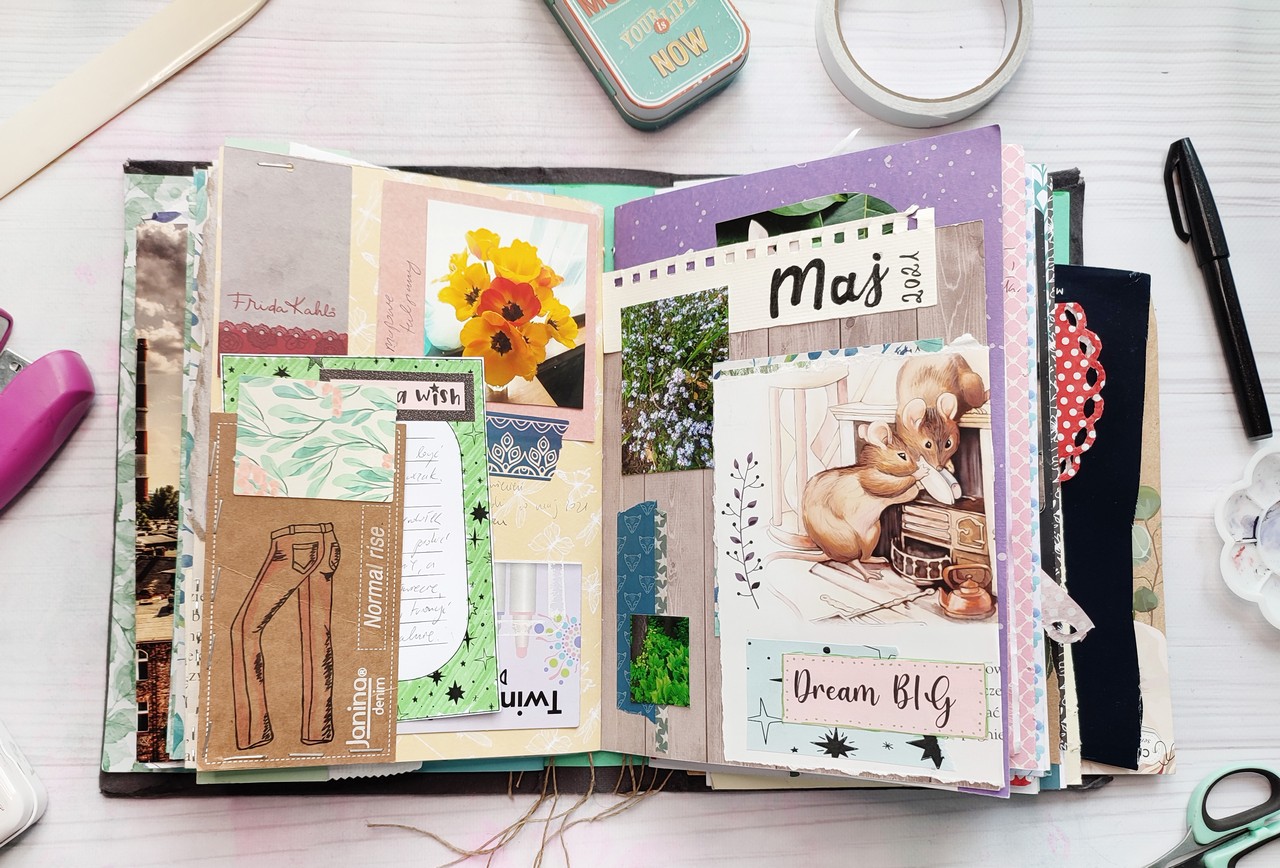
If you’re short on ideas, try using “prompt lists,” which suggest topics or themes. Some might ask for specific details, while others leave room for interpretation, like:
- What I’m currently reading
- What’s on my mind
- Favorite quote
- View from my window
- My day in a map
- A dream
- One event from today
- One photo
- Swatches of pens I bought today
These prompts can spark ideas for capturing the everyday moments that bring you joy!
Summary – Enjoy the Process!
Whether you choose Project Life or dive into junk journaling, remember that the specific format is secondary. Like with any activity you want to enjoy, the most important thing is to relax. Perfection doesn’t exist, and the idea of “perfect” is overrated. Documenting memories can shift how you view your world, bringing joy not only in the future as you look back but also now, during creation. Focus on the process instead of the final product, and you’ll surely find your flow. I genuinely wish this for you!
If you found this post helpful, feel free to share it on your social media or leave a comment. It means a lot to me. See you online!
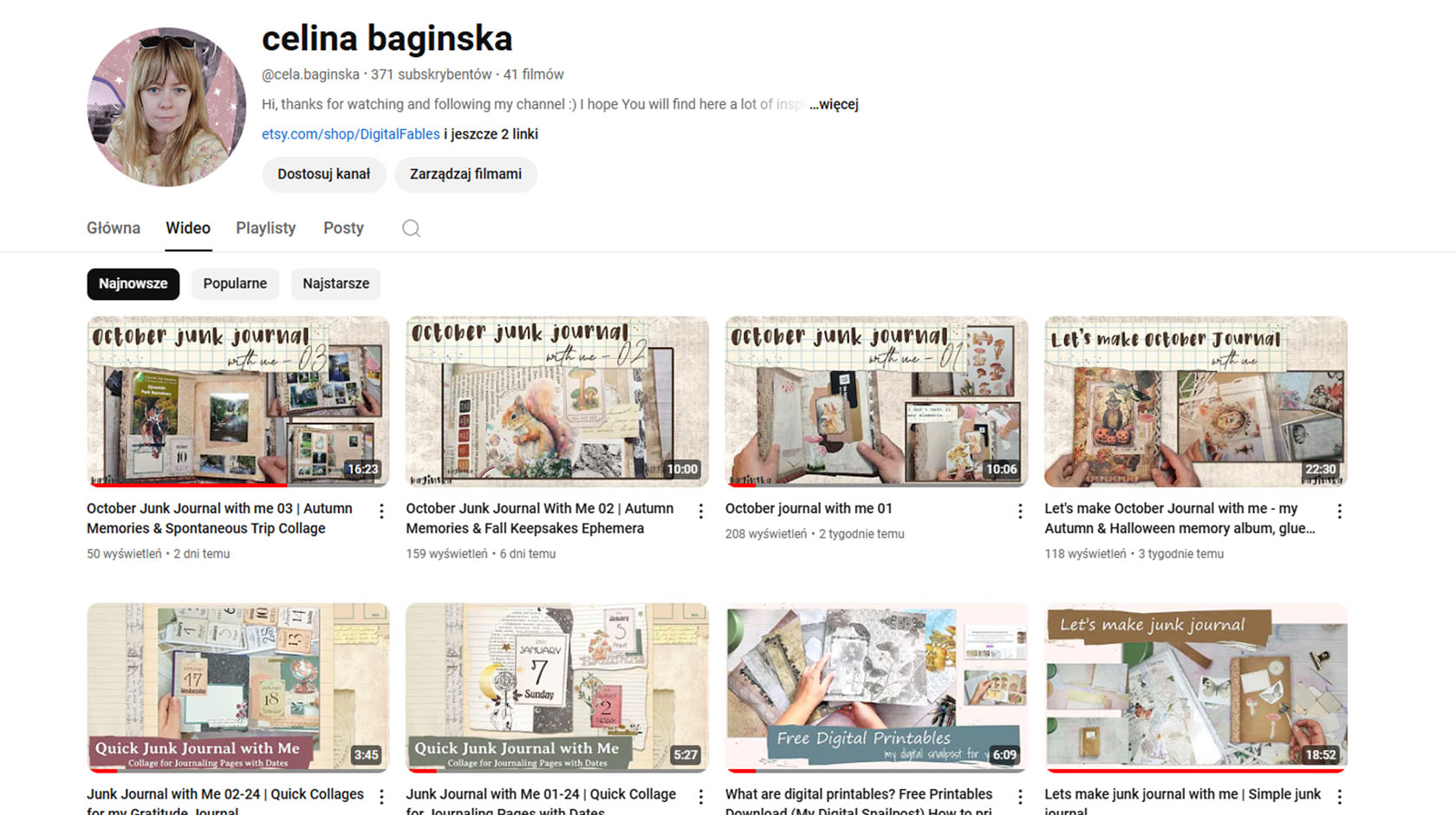
Want to see how I document memories? Visit my YouTube channel for Junk Journal With Me videos ⬇
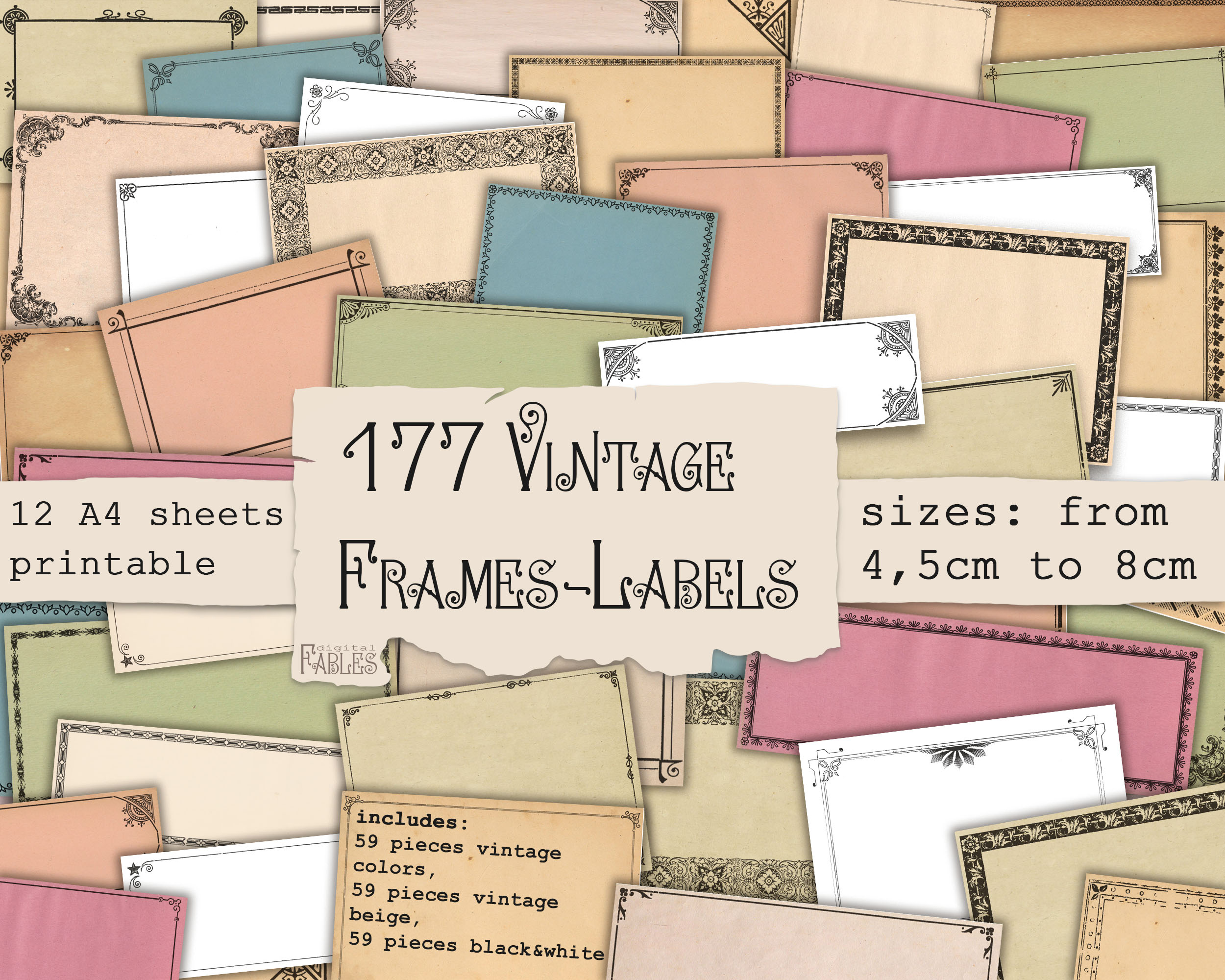
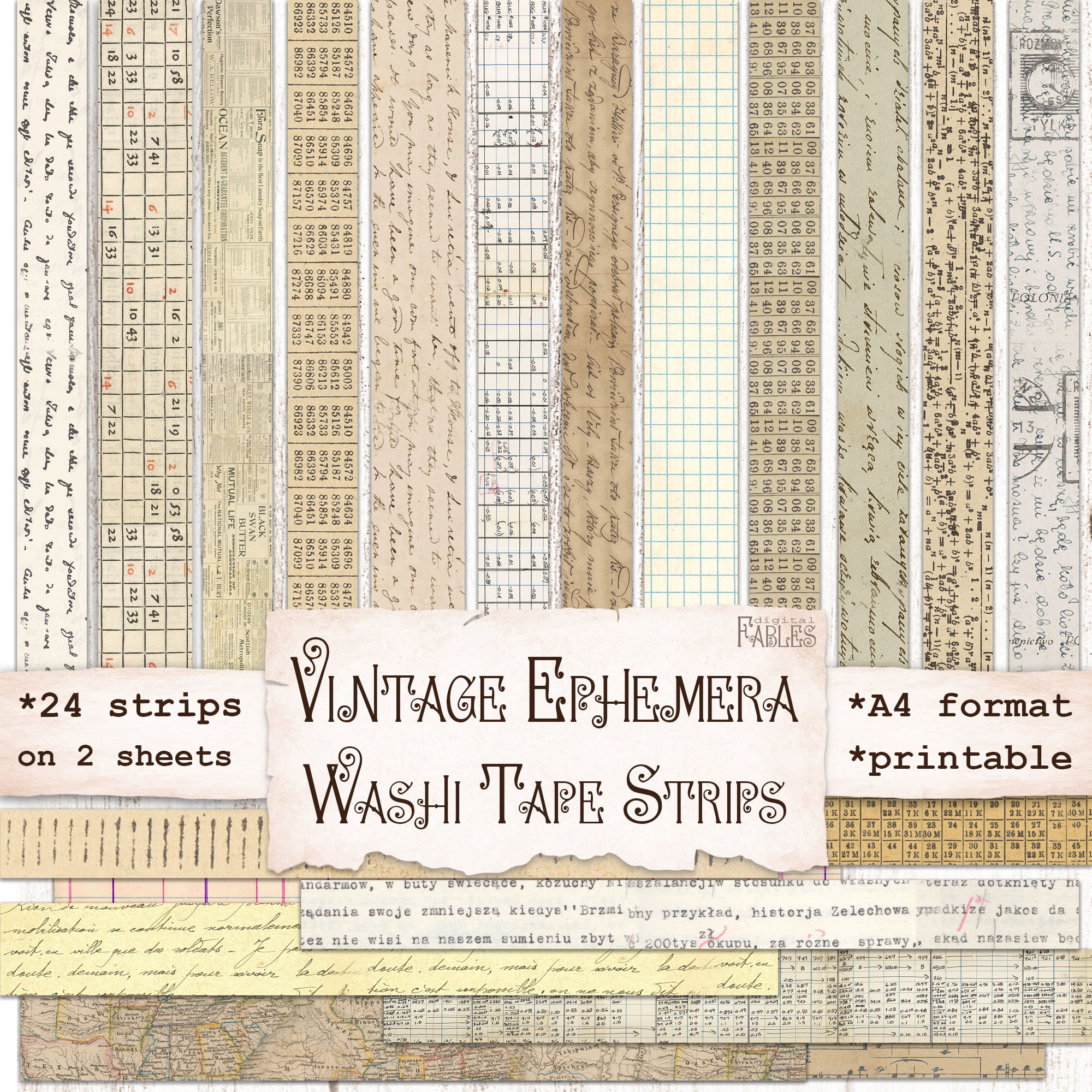
Looking to add vintage flair to your journal? Try out my bestselling vintage-style labels and washi tape printables from my shop—perfect for beginners and experienced journalers alike!